GVEA pegs new turbine at $80 million, but analyst questions cost, timing and need
The members of the Golden Valley Electric Association deserve to hear more points of view about the utility’s proposal to buy a second large generator similar to a jet engine on a 747.
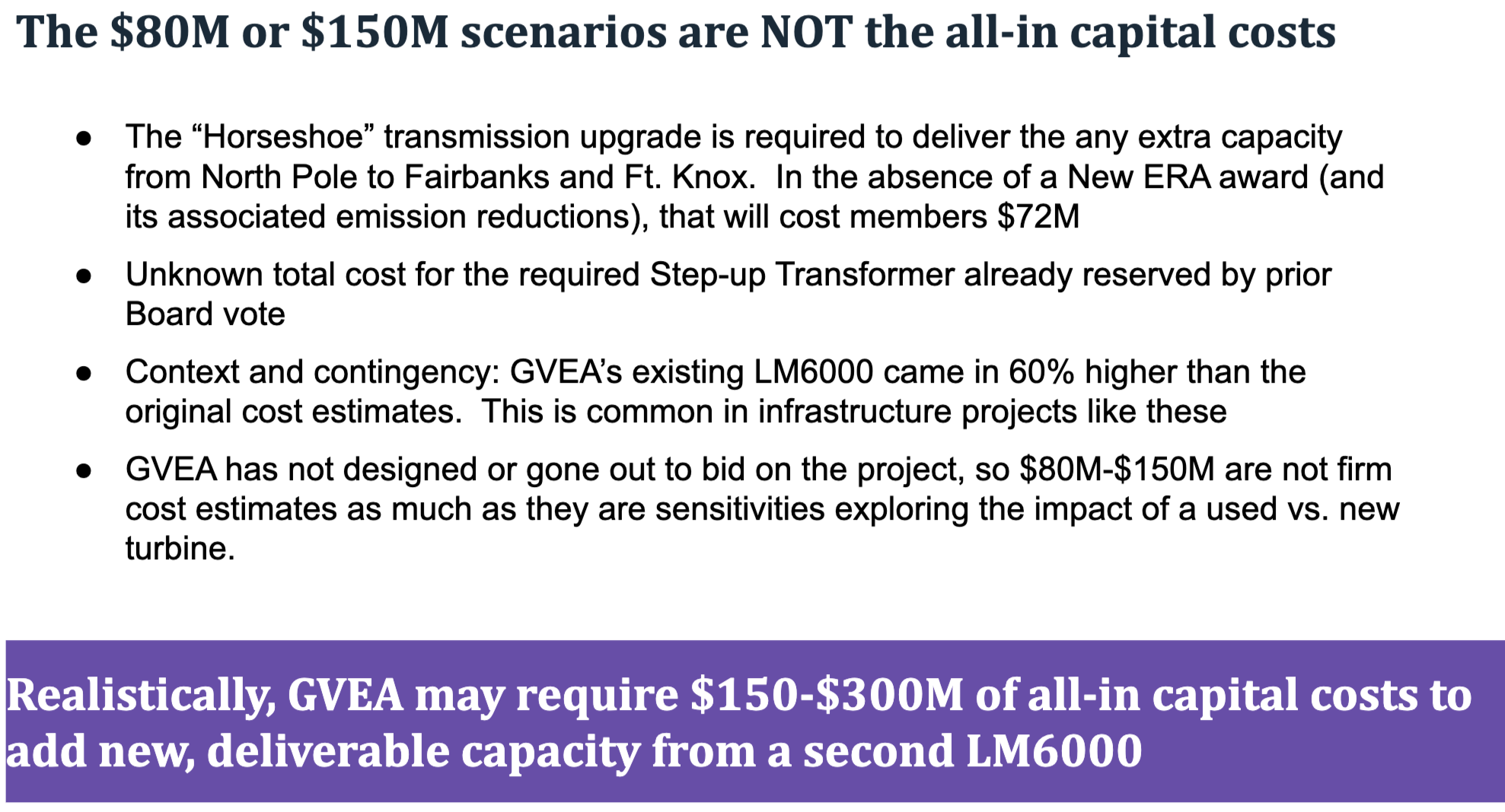
GVEA management asked the utility board August 25 to advance plans to get a used LM6000 for no more than $80 million. “No purchase commitment was requested at the meeting, and any contracts or financial obligations would return to the board for approval,” GVEA said.
The board approved a motion authorizing the CEO to look into a plan for “additional baseload generation not to exceed $80 million” within the next five years.
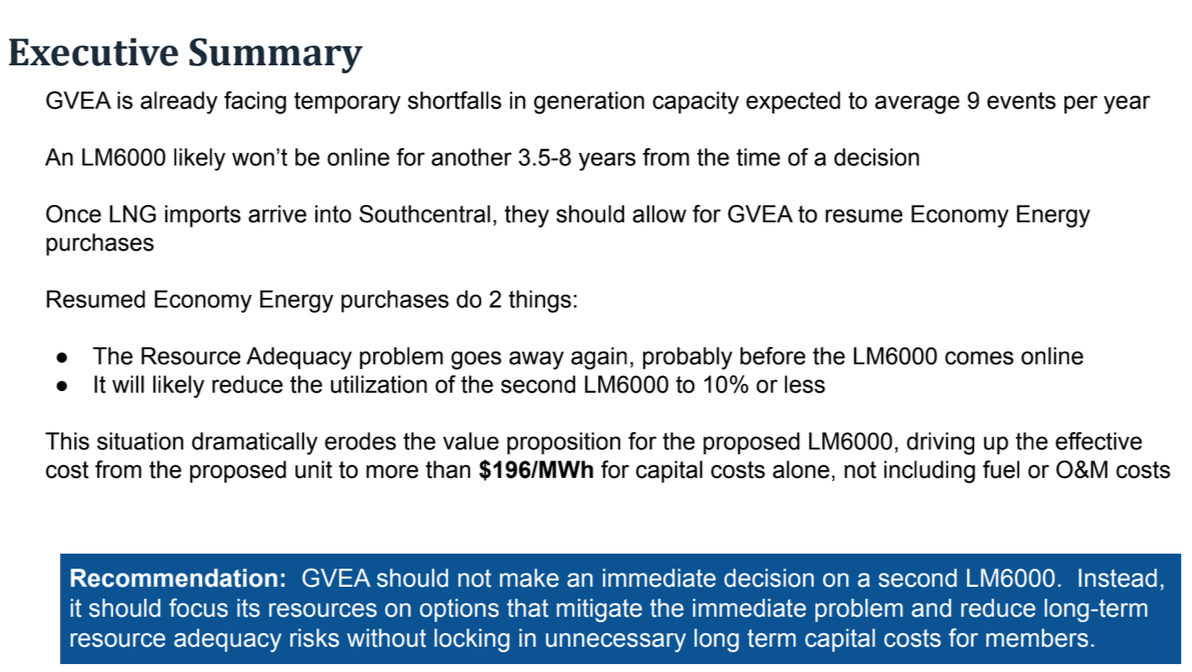
The cost of an LM6000, the timing and the assumption that it would be a solution are subject to dispute. Andrew McDonnell argues that GVEA “should not rush into a costly long-term decision without further analysis, resource planning and competitive procurement.”
McDonnell is a co-founder of Alaska Renewables LLC, a board member of the Railbelt Reliability Council, a former UAF professor and a former GVEA consultant.
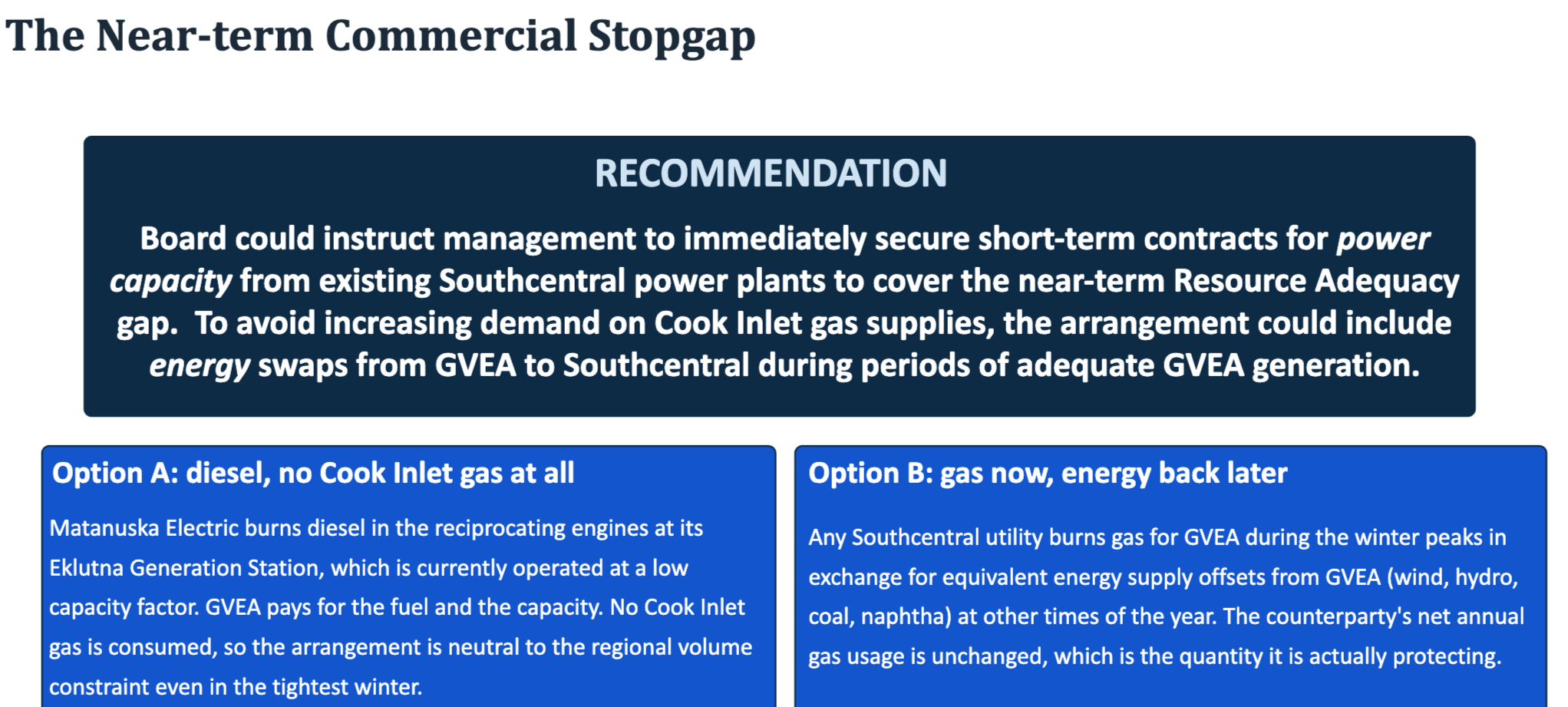
He makes a strong case that the new generator would not solve the immediate problem that GVEA faces and the installation could take years longer than predicted.
In less than five years, Southcentral Alaska is going to need gas imports, regardless of what happens with the Alaska LNG project. As soon as those gas imports begin, GVEA will be able to get cheaper energy over the intertie than the new generator could provide.
The new LM 6000 might then only be used 10 percent of the time, he says.
“Making a decision on an LM6000 now is a risky bet that oil-fired generation and the capital costs of a new LM6000 will be cheaper than gas power from Southcentral in the long run,” says McDonnell.
GVEA should go through McDonnell’s presentation and present the members of the association with its counter arguments.
The GVEA assertions that a generator could be acquired in three or four years “under the best-case scenario,” should be accompanied an admission that the best-case scenario almost never happens. Likewise, the assertions that two used LM 6000 unit have already been inspected and that they get snapped up quickly so we better act fast sounds like a pitch from a used car salesman.
“Based on management’s modeling, a used LM6000 could result in an approximately 5% reduction in member rates, or about $10 per month for the average residential member,” GVEA predicts.
That modeling includes so many assumptions that it should not be put forward without a statement saying what chance there is that all the assumptions will prove to be correct. In other words, what could go wrong?
Erin McKittrick, who writes the Alaska Energy Blog on Substack, says that GVEA’s own slides show that there is no good reason to buy the LM 6000 right now.
“GVEA’s immediate problem is that its industrial customers (mines and the military) are increasing their use, and they may not have enough generation to always meet the peaks,” she writes.
“GVEA’s new turbine plan isn’t necessarily a bad idea. The set of assumptions they used could happen. And there’s always a tradeoff between planning and action,” McKittrick said.
“But in this case GVEA voted to move this project forward in the midst of the Railbelt planning process, knowing that the RCA would need to provide special approval if their turbine doesn’t end up in the final selection. Only a week after the vote, GVEA’s rep to the planning meeting said that he’d be happy for the model to evaluate their turbine. He expects it will show that it’s a good idea, but seemed open to finding out otherwise. That seems like a better attitude,” she wrote.
Here are some of the key slides from McDonnell’s presentation: