Alaska congressional delegation has little to say about Trump's new war
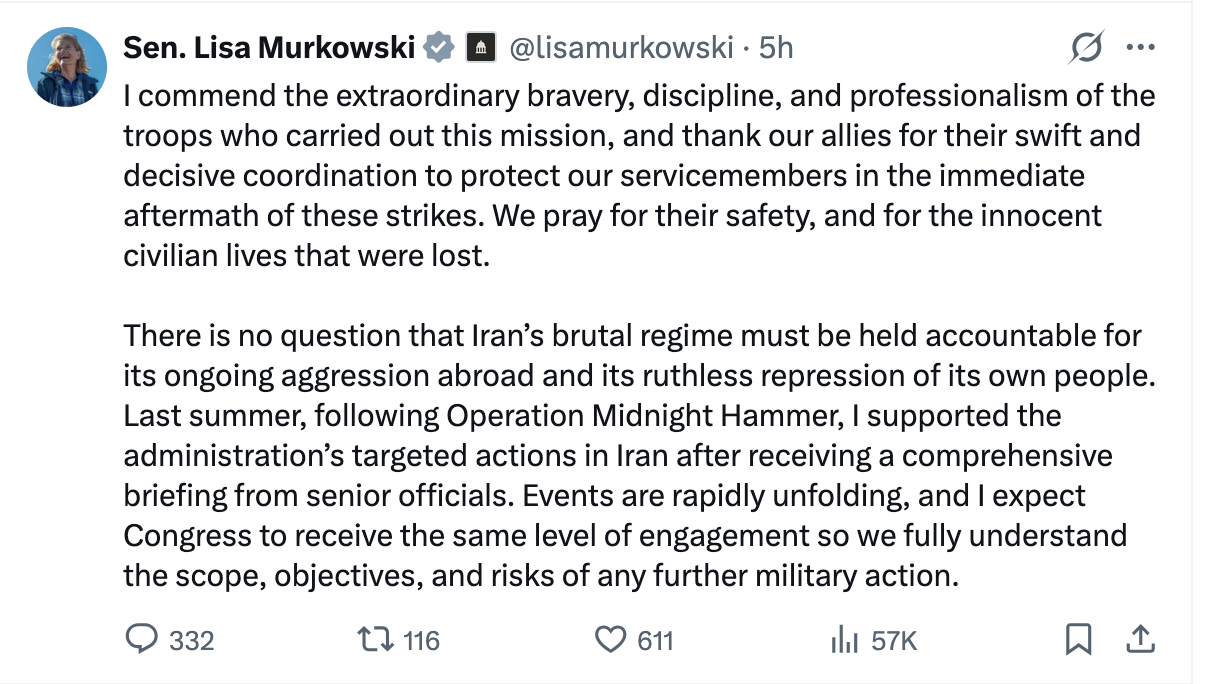
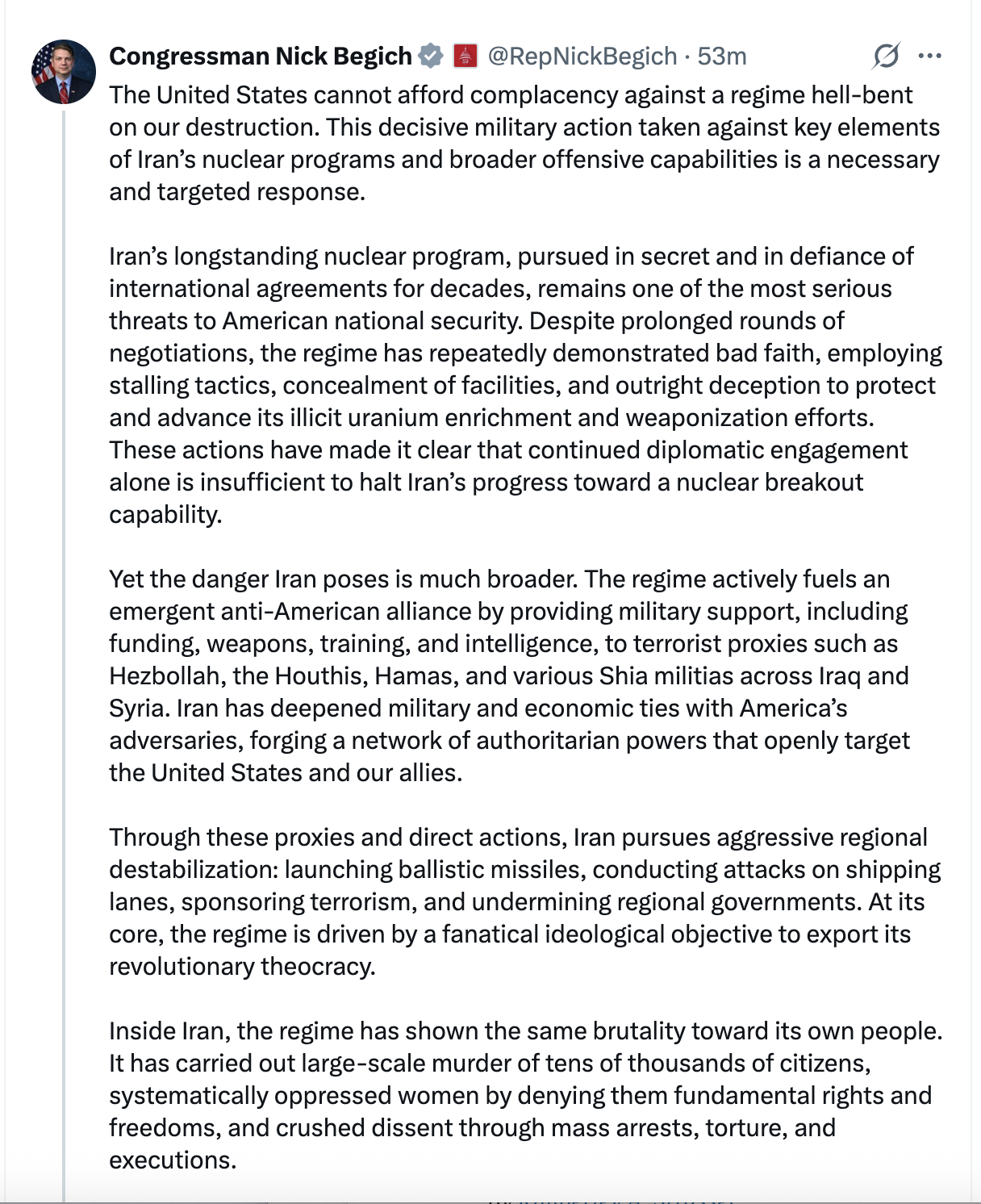
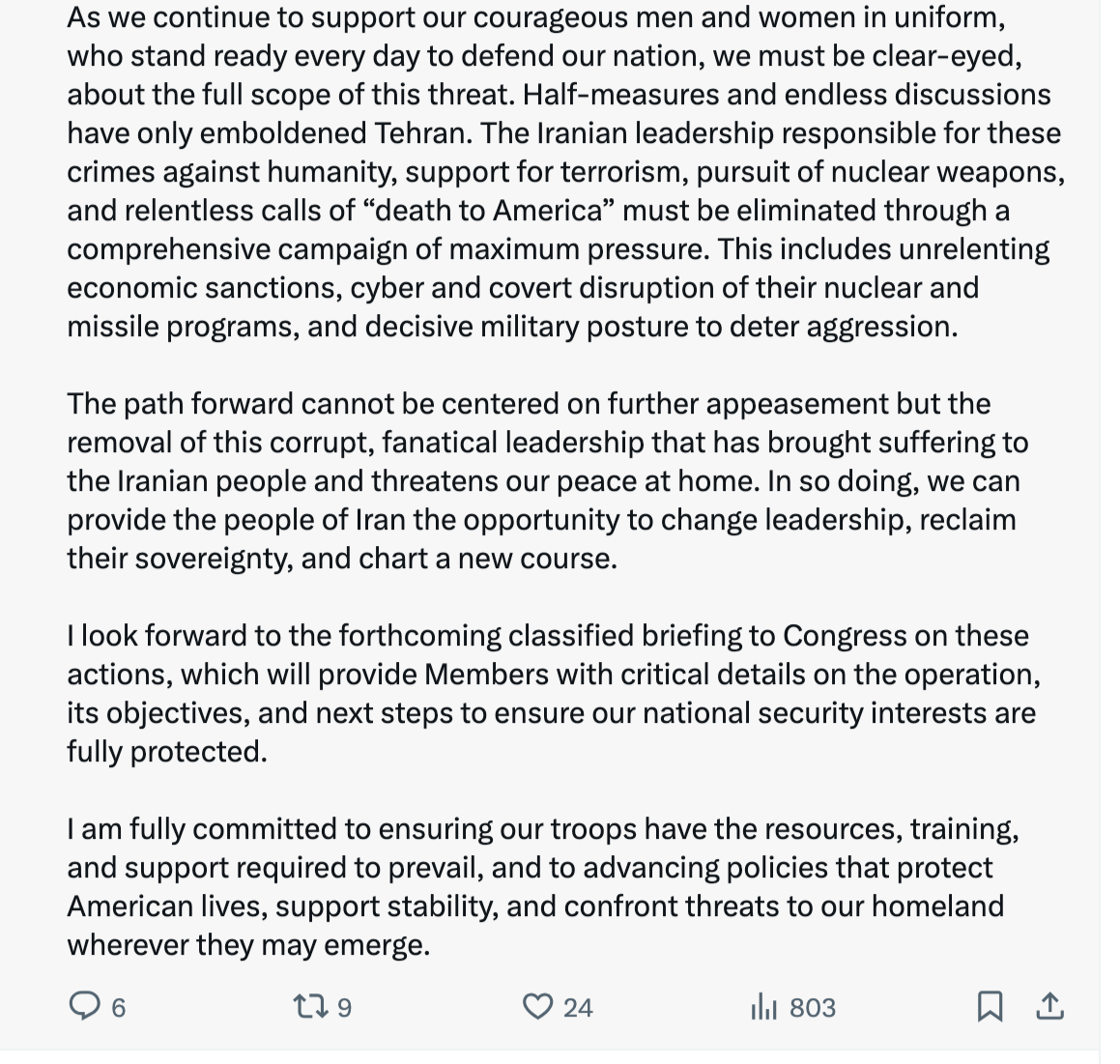
The canned responses by Sens. Lisa Murkowski, Dan Sullivan and Rep. Nick Begich the Third about the new surprise war against Iran are predictably superficial, designed to avoid even suggesting there are important questions about why this is being done now, what the risks are for the U.S. and the world, what is the alleged justification and what comes next.
They didn’t even mention that last June Iran’s nuclear facilites were “obliterated,” according to a Trump statement still on the White House website.
The Republican Congress is not part of this picture, which is something that Murkowski, Sullivan and Begich the Third won’t admit in public, but it’s what they failed to say about Trump’s war that reveals the truth. They are mere bystanders.
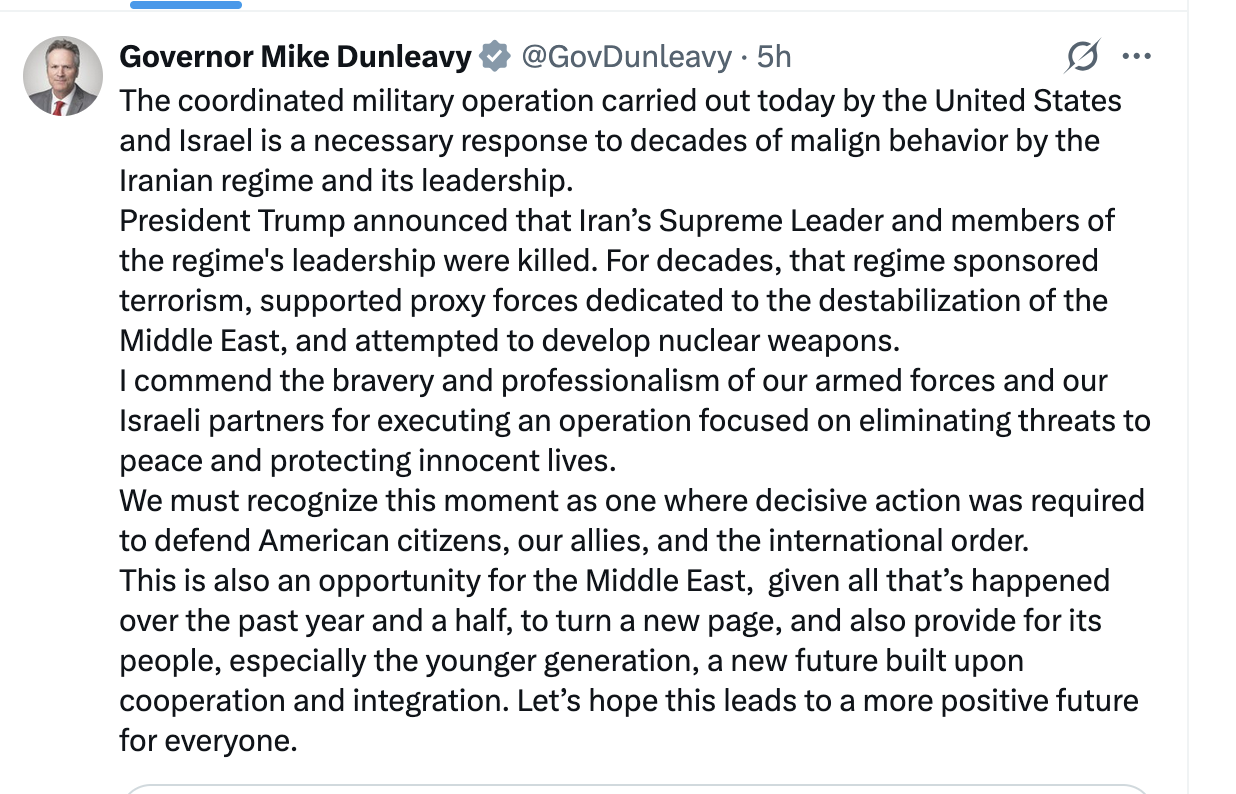
Another uninformed member of the audience, Gov. Mike Dunleavy, who will never stop competing for Trump’s attention, opined that the war is a “necessary response” and required to “defend American citizens, our allies, and the international order.”
Meanwhile, David Sanger of the New York Times has a sober analysis that everyone should read. Here it is.
Sanger notes that Trump didn’t bother to make the case for war against Iran with the country.
“His pretaped video, released in the middle of the night as the missiles started exploding in Tehran, recited a list of long-running grievances with Iran, including its brutal use of terror. But he never explained why in the pantheon of threats facing the United States, including an already-nuclear-armed North Korea and the expanding nuclear arsenals and territorial ambitions of Russia and China, a weakened Iran ranks first,” Sanger wrote.
“So in choosing this moment, and this vector of attack, a man who came to office promising an end to reckless military interventions — and wars intended to prompt regime change — is taking a huge risk. There are few, if any, examples in history of toppling the government of a large nation — in this case about 90 million people — with air power alone.”
“And yet Mr. Trump has made clear that is his plan. He has no intention, administration officials have insisted, of sending in ground troops to finish the job, the invitation to the “forever wars” that he campaigned against.”
Sanger concludes that Trump’s may be judged on this by whether he has ignored the Churchill rule.
“Long before he became Britain’s wartime prime minister, Winston Churchill wrote about his youth, as a journalist and sometime participant in wars. ‘Never, never, never believe any war will be smooth and easy, or that anyone who embarks on the strange voyage can measure the tides and hurricanes he will encounter,’ he wrote in ‘My Early Life.’”
“The statesman who yields to war fever must realize that once the signal is given, he is no longer the master of policy but the slave of unforeseeable and uncontrollable events.”