Alaska doesn't need 'state-sponsored infrastructure financing platform'
The AIDEA board resumes its meeting Tuesday at 10 a.m. in Anchorage.
Information on how to listen or make a public comment can be found here.
We do not know exactly what AIDEA is planning to do as the agency likes to keep the public uninformed, providing as little information on its agenda as possible. As is standard practice, the public comment portion of the meeting takes place before the AIDEA board reveals what actions it is planning to take.
This lack of transparency is one of the things that needs to be corrected by the next administration. The public should have access not just to a one-page agenda, but a complete packet with background that explains what is happening with public funds. And AIDEA’s money is public, despite the claims to the contrary by the AIDEA staff.
While AIDEA continues to claim that it spends public money in a transparent fashion, there are many examples where it is opaque.
I’ve written here before about Nucube Energy and how the state agency has not released detailed on why it chose to put $25 million into that private company, as opposed to others. The company has been promoted by a close ally of Gov. Mike Dunleavy.
Another recent example is the decision the corporation made on January 21 to put $20 million into a new AIDEA subsidiary to examine whether a “tokenization program” should be started.
I am sure some of my readers know exactly how a tokenization program works and will let me know because I don’t.
I have a strong suspicion, however, that this is something on which AIDEA should not be trying to get on the leading edge, given the universe of competing projects in Alaska where $20 million would be useful.
We now have what a Dunleavy press release calls a “state-sponsored infrastructure financing program.” He is promoting the development of data centers.
What’s clear is that the AIDEA board didn’t take long to decide the state should get involved. Here is the audio from that January meeting. The discussion begins at 12 minutes and 30 seconds into the session and lasts for about 13 minutes.
Note that the AIDEA board had no real discussion on why $20 million was the right amount, other than that is what the staff suggested. This failure to delve into financial details and ask obvious questions is a chronic problem with AIDEA’s operations.
To his credit, board member Andrew Guy said $20 million seemed high and that it would be good to see a budget, but that idea went nowhere.
Brandon Brefczynski, who began work as a legislative aide about 16 years ago, has had a variety of political jobs under Dunleavy—the latest as deputy director of AIDEA.
After hearing the pitch he made for tokenization in January, I am convinced that this is something that a private company should be promoting with private money.
The resolution just said there would be an “inquiry” into the tokenization plan, but that was deceptive. The agency has set up the business structure, working with a California company called Plural.
“What this will effectively accomplish is allowing Alaskans, other investors, to participate with AIDEA,” Brefczynski said in January of the tokenization platform.
“You know we only have so much, so many resources as a public corporation, which this will then allow co-investors alongside of us to stretch our dollars further. This is new. The world is moving toward this tokenization strategy to finance projects. It’s being talked about down in Wall Street, the New York Stock Exchange is considering a tokenization platform on their own exchange,” Brefczynski said.
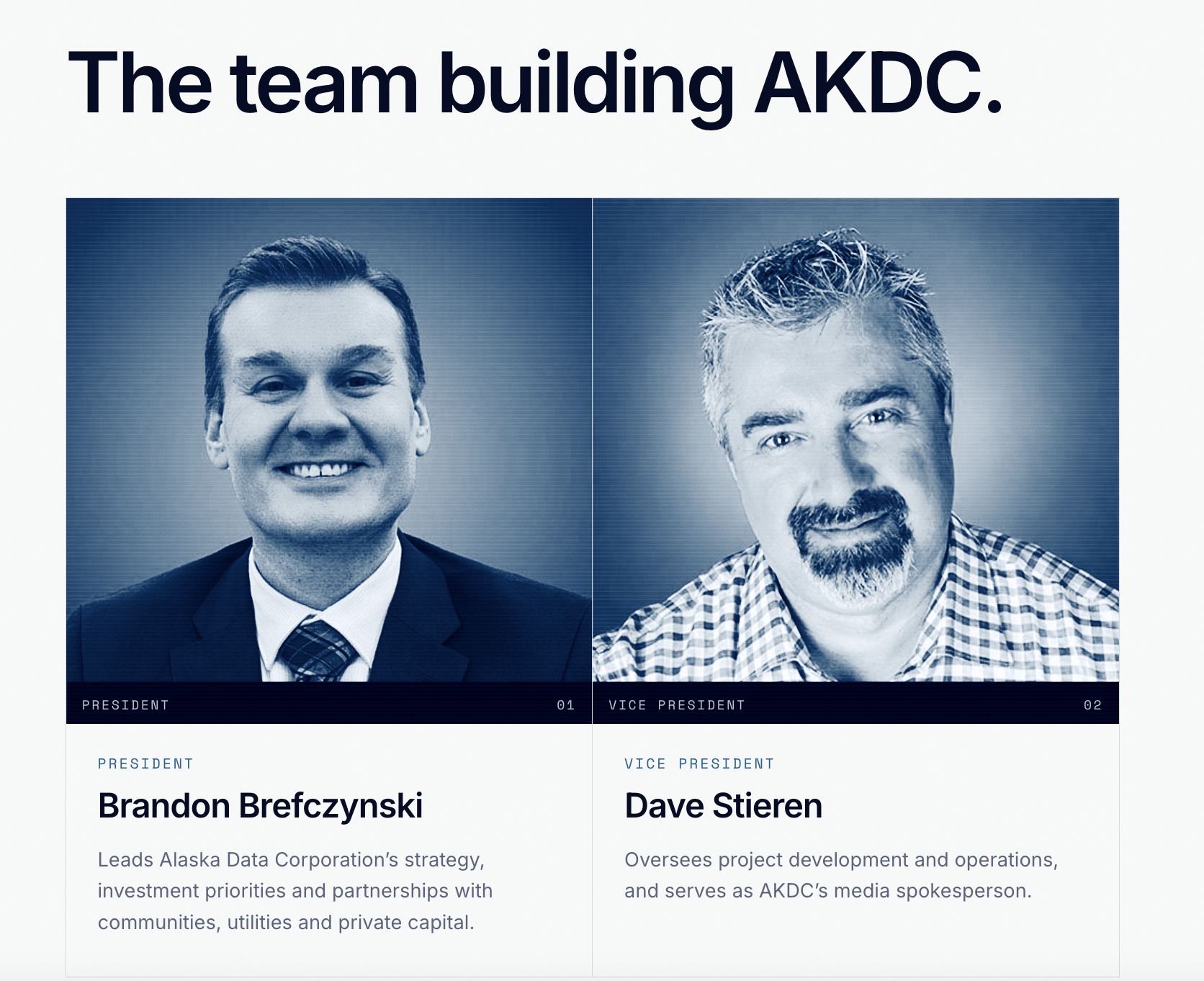
Fast forward to the final month of the Dunleavy administration and Brefczynski has been named president of the Alaska Data Corporation LLC, while fellow AIDEA employee Dave Stieren, a former radio talk show host, is vice president.
“The initial focus is distributed data centers, bringing State capital and private developers together to support new investment, jobs, and digital capacity in Alaska,” according to Plural, the California company.
The timing of this is driven by the end of Dunleay’s term, which is not a good reason to decide anything. A complete examination of this proposed $20 million venture is needed along with a legislative review. The money, after all, could well have been made available to the Legislature to pay for competing purposes.
Brefczynski and Stieren, political employees who are likely to be returning to the private sector with the change of administration, are not investment professionals and have little business experience, though they are advertised as the team that is building the Alaska Data Corporation LLC, a Delaware company that “deploys strategic capital and infrastructure assets to create growth in new economic sectors.”
The state has started “InvestNorth,” promoting it with this gibberish: “For fifty years, the Permanent Fund has let Alaskans share in the oil beneath their land. InvestNorth brings that idea to what gets built on top of it. The power plants, data centers, and ports going up here should mean more jobs for Alaskans, more of the value staying in the state, and a stake for Alaskans too.”
InvestNorth defines tokenized as: “It means your share is recorded digitally, in your name, on a blockchain: a public ledger copied across many computers at once. Most stock is held in “street name”: the issuer’s shareholder register lists a clearinghouse, and your ownership is recorded on your broker’s books. Here, the issuer’s register records you directly. Once something is recorded, including payments and the rules for who gets paid, no one can change or erase it. Legally your share is a security, like a stock. It is not a cryptocurrency.”
On November 9, with a month to go in his administration, Dunleavy announced the new venture.
“The first industry InvestNorth and AKDC (Alaska Data Corp.) are targeting is digital infrastructure through capital that has been set aside to invest in technology projects statewide, which is intended to create jobs, open new investment opportunities and expand the State's sources of revenue,” the press release said.
The state has not revealed what its business arrangement is with Plural, the California company.
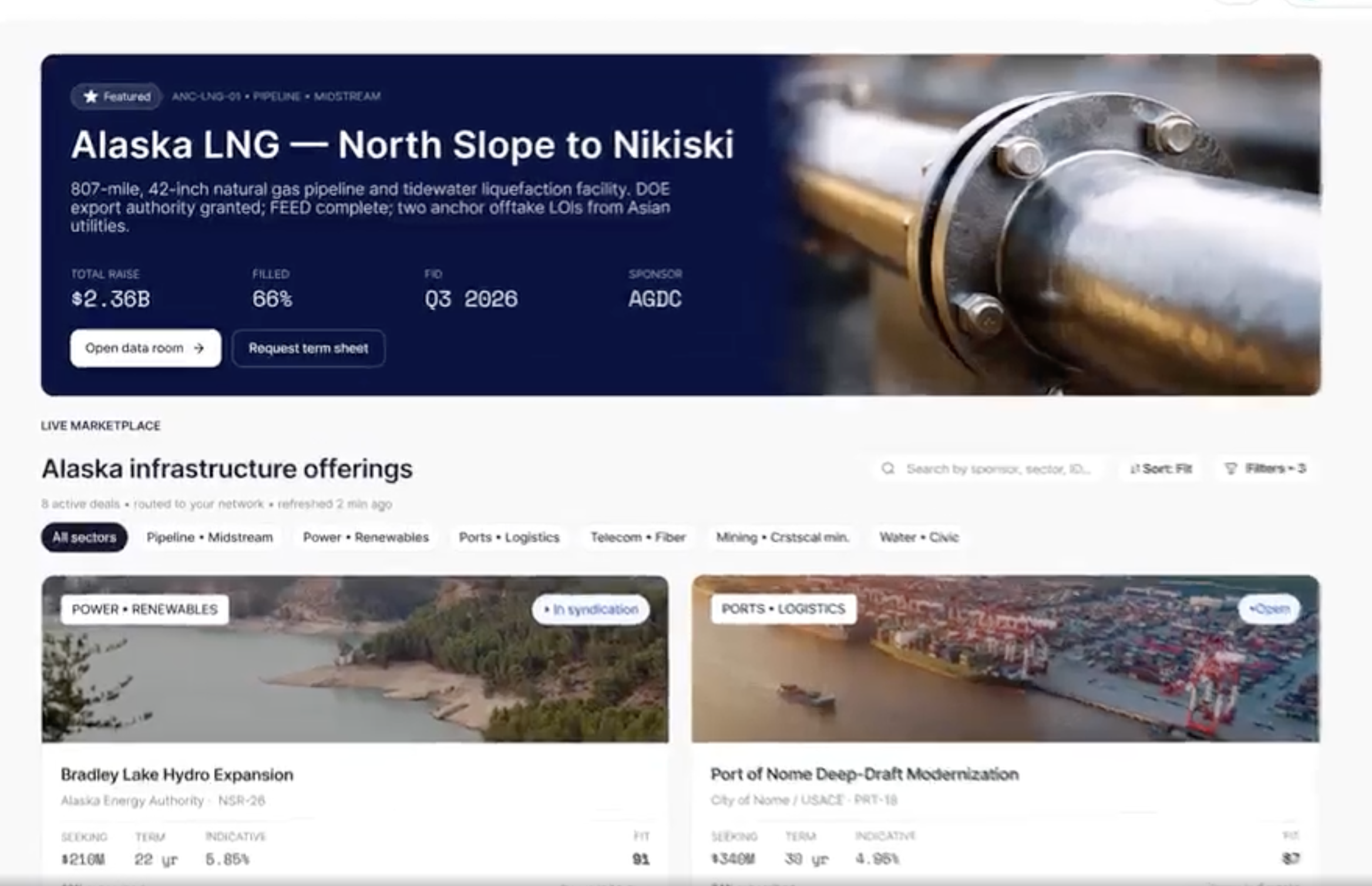
A promotional video by Plural about InvestNorth lists the Alaska gas pipeline, Bradley Lake hydro and the Port of Nome as potential investment opportunities, but those are used for illustration purposes only.
It’s not clear if InvestNorth will meet its goal of completing an investment offering before Dunleavy is done.
“No offering is being made at this time; structure, timing, and terms have not been determined,” Plural said.
“Most offerings are meant for Alaskans, and some may be open only to people who live in Alaska. Each offering will say plainly who can take part before it opens,” InvestNorth said.
Your contributions help support independent analysis and political commentary by Alaska reporter and author Dermot Cole. Thank you for reading and for your support. Either click here to use PayPal or send checks to: Dermot Cole, Box 10673, Fairbanks, AK 99710-0673.