
JKT has what it takes to lead Alaska after 8 years of Dunleavy decline
It says a lot about Jonathan Kreiss-Tomkins that even when he broke two bones in his right leg during a paragliding flight from Flattop four years ago, it was a bipartisan event.
Anchorage Republican Rep. Laddie Shaw was paragliding with him that day when JKT got into trouble on his first flight from Flattop. Shaw was there to lend support to his friend.
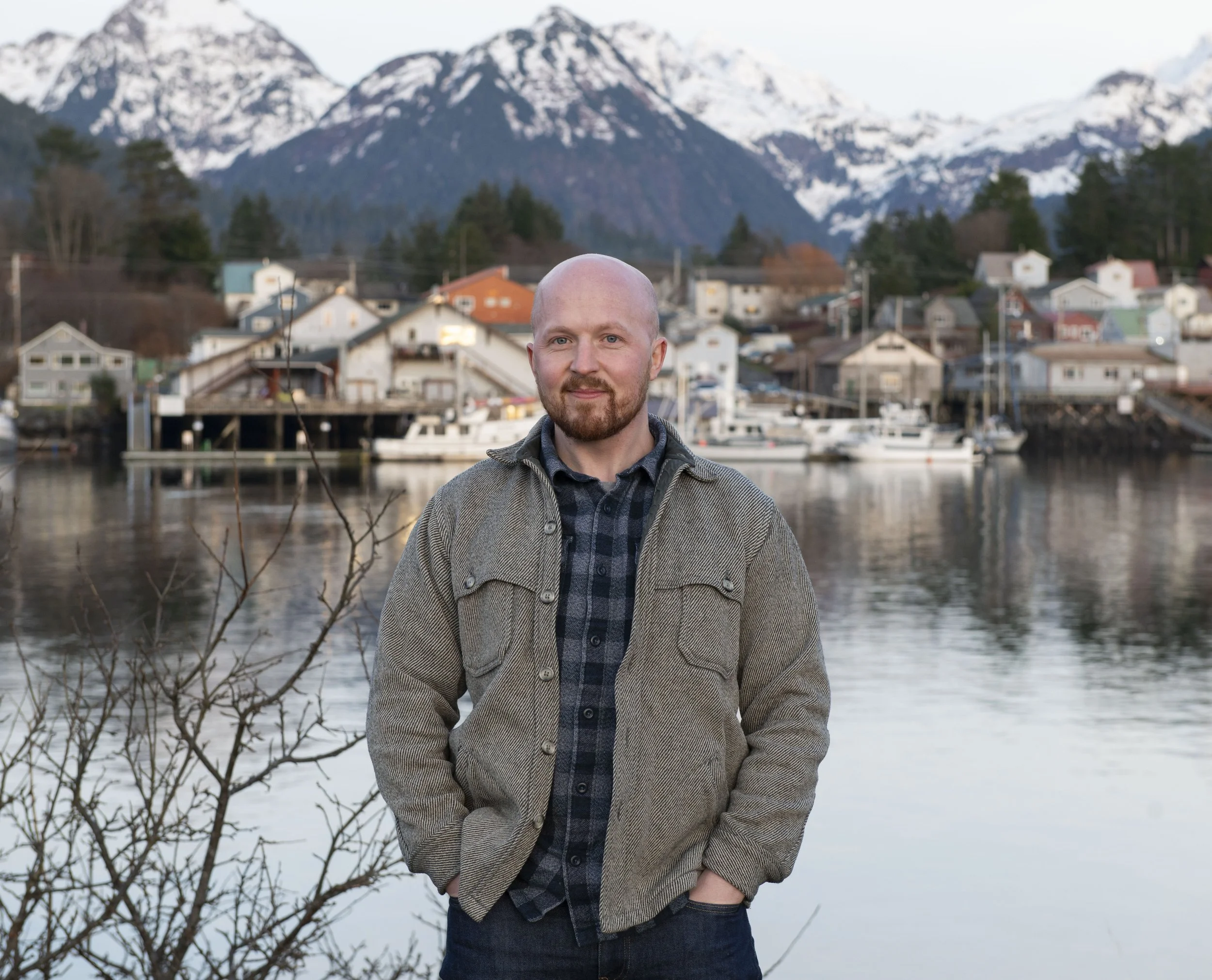
“We just got together and went for a little hike on Flattop Mountain,” Shaw told reporter James Brooks of the Alaska Beacon after JKT got into trouble.
“He’s a Navy SEAL and he is a Vietnam vet,” Kreiss-Tomkins said of Shaw after the accident. "And he’s lived quite a life. And we have a lot of shared interests. We’ve been friendly over the years, and he has been sort of a source of encouragement to pursue paragliding.”
“It was my first time flying there, needless to say,” Kreiss-Tomkins said early in his recovery. “And so I had basically taken a more conservative — and also longer — flight path, and so had much less elevation as I was approaching landing than would have been ideal. And so that resulted in kind of a non ideal landing.
Of course not every bipartisan adventure ends in a hospital emergency room, but Kreiss-Tomkins, who looked for other outdoor pursuits after that, has shown an ability during his 37 years to find common ground with people of all kinds.
He’s is by far the best candidate for governor on the ballot Tuesday. The Republican candidates include one who foolishly brags she has no experience and two who have shown no ability to work across party lines on anything.
The bipartisan support Kreiss-Tomkins has earned from across Alaska is the strongest signal that JKT will be able to end the endless Dunleavy gridlock and find compromises that allow Alaska to take on the biggest challenges facing the state from finances to education and resource development.
Former Govs. Tony Knowles, Frank Murkowski and Bill Walker have endorsed him, along with Sen. Lisa Murkowski, numerous former and current legislators of both parties, as well as lots of public officials, business executives and civic leaders.
The current governor has made it a practice to listen only to those who agree with him. That’s the main reason why he has so little to show for the past eight years.
JKT has a proven record of listening to people with all points of view—both those who agree and disagree with him—an essential trait in solving big problems.
He is a young guy, but don’t be fooled. He has more experience studying and working on public policy than all three Republican opponents.
After he entered the Legislature in 2013, Kreiss-Tomkins made an immediate mark by what he chose to do and not do.
“I was very focused on just listening and learning and sponging up everything about the Legislature and made a point not to introduce a single bill, which I didn't,” Kreiss-Tomkins said in a podcast interview.
He began his second year in the Legislature with a short, but important bill to add 20 Native languages as official languages of the state. The bill was the product of a long and complex grassroots organizing effort that involved people from across the state.
The bipartisan organizing work he did as a freshman minority legislator led to the passage of the bill by a unanimous vote in the state House and an 18-2 vote in the Senate. He was not a committee chairman or in a position of power, but that didn’t stop him from making and building on personal contacts that make all the difference in life.
The importance of the preservation of Native languages had been one of Kreiss-Tomkins’s major interests when he was a student at Yale. He had corresponded with and spoken to Michael Krauss, a leading scholar at UAF, and visited him in Fairbanks about 15 years ago. He was inspired by Krauss’s interest in the history and geography of languages.
Of Krauss and his language map of Alaska, Kreiss-Tomkins said that Krauss drew the lines “not because he knew them to be right but because they seemed the most right from what he knew (which, by the way, is an extraordinary amount.)”
It was through Krauss that I first met JKT, who was staying at Krauss’s house and asked him for ideas on people he should meet in Fairbanks. Krauss mentioned my twin brother Terrence, a history professor at UAF, who in turn invited my brother Pat and me to meet JKT.
A competitive runner at the time, JKT ran into Fairbanks from Farmer’s Loop one Sunday afternoon and got out a notebook from his backpack as he sat down with us over coffee at McCafferty’s on Cushman Street downtown.
JKT was working on a book about what was distinctive about every region of Alaska, inspired by the work of Joel Garreau on “The Nine Nations of North America.” It
“It's a hugely subjective and assuming exercise. I don't pretend otherwise! But it's also a provoking, holistic way to consider the wildly disparate cultures of our state - the different Alaskas within Alaska. I'm trying to inform the lines on my map of Alaska's ‘cultural nations’ by finding the attributes that explain why you get a certain feeling when you walk down any given town's main street,” he wrote in 2011.
My brothers and I were struck by his ability to listen, as he asked us about Interior Alaska, it’s history and ideas about its future. His sense of curiosity and his enthusiasm made for a memorable meeting of the four of us.
I don’t know that anything really important came out of the conversation that day, but my brothers and I were so impressed with this young man, who looked like he was about 15, that we agreed he might have a future as a teacher or in politics.
Everything that I learned about JKT as I watched him during his decade in the Legislature did nothing to dissuade me from that first positive impression that took hold over a couple of hours at the front table in McCafferty’s.
At the time I did not know that JKT had been thinking about politics since he was a little kid. He had been the Alaska statewide organizer for Presidential candidate Howard Dean in 2003, getting nearly 500 people to sign up.
JKT was 14.
JKT had researched all of the Democratic candidates and chose to support Dean because of his opposition to the war in Iraq and his stand on the environment. He set up a branch of the National Dean Network for Alaska, recruited volunteers and because it was the Internet, nobody knew at first that he was a freshman in high school.
"People, when aware of your age, don't usually value your opinions as much," he told a reporter for Education Week. "You also can't fund raise or organize fund- raising. I usually don't talk about my age at all to any of the people I work with, although recently it has gotten out, I guess you could say."
“How much time you been spending campaigning for Howard Dean?” Host Steve Inskeep of All Things Considereed asked JKT in an interview 23 years ago.
“Lots of time. I'm usually up till 1,” he said. “To my parents’ disgust.”
His parents were not supporters of Howard Dean, but they did contribute to the Dean campaign because JKT did household chores.
"I like how politics is always changing," he said all those years ago. "The only reason I'm doing this is because I want change, and politics and government are the easiest way to incite change."
As someone said at the time, growing up in Sitka, “it was hard not to know” Kreiss-Tomkins because he was involved in music, sports, debate, Boy Scouts and more.
After finishing high school in Sitka, Kreiss-Tomkins went to Yale, where he displayed impressive skills in communication and public policy. He almost finished, but returned to Alaska.
The Sitka Sentinel endorsed him for the Legislature in 2012, saying he “comes into the contest with a record of accomplishment in public service that would do credit to a candidate twice his age. Add to that his willingness to listen, his ability to work with others and his commitment to hard work in accomplishing his goals, and we have a candidate who we believe will be an influential spokesman for Sitka in the Legislature for years to come.”
After all these months of negative campaigning in Alaska, my outlook was brightened Sunday when as part of the research for this column, I read a beautiful composition that Jonathan wrote for the Yale newspaper in 2012 in which he praised his hometown and described how much Sitka meant to him.
He’s a lot older now, all of 37, but we could use someone in the governor’s office who thinks and understands how life in Alaska can be an essential ingredient in the happiness that we have found or are still searching for. What he said could apply to places across Alaska.
This is both a closing message and an opening about envisioning a better future:
Answers are scarce and often slight, but I've found at least a few of them. I like giving to people and I like caring for people. I appreciate, deeply, being cared for. I've found happiness tends to echo around inside of me until encountering my conceits and pretensions, which, ever greedy and always too present, absorb it. I've come to think that these are my intrinsic, inherent qualities and would be true no matter what.
But I'm also a creation of where I came from. Growing up, and especially in high school, I began to appreciate Sitka as a truly special place. I like that cars swerve slightly out of their way when passing me on my bike. If I forget to bring my wallet downtown, I know I can walk into the Backdoor Café and, at the expense of some gentle ribbing, borrow a few dollars from one of the at least several friends that I know will be mingling inside. I still find entertainment in high school memories of mildly illegal late-night shenanigans that involved, in no particular order, wet suits, sleds and storm drains.
Every day, after coming home from elementary school, Mr. Rogers would tell me - kindly, reassuringly - the same thing: "Each one of us is special and it's because of who we are inside. We're all different and we all have something to offer our world."
I'm special, certainly. Not everyone can say they sported purple socks on an elementary school playground contemporaneous to Tinky Winky's Teletubby fame. But Sitka is special - its bicycle-conscious drivers, abundant lines of coffeeshop credit, amusingly deviant, wet suit-wearing high school hoodlums.
Even if I lead a life of quintessential mediocrity, even if I amass all the distinction of one of those people who is not Waldo - even if I'm nothing more than nothing - at least I'm from Sitka. It's my fail-safe for when I fail; it's apparently the stuff of prom royalty. Sitka is very much a source of happiness. So, have I mentioned yet that I'm from Sitka, Alaska?
When I first started college "out east," I was surprised others weren't similarly gushing about their hometowns. I first met my roommate's stuff before I met my roommate, and he was: a poster of Albert Einstein squinching his face and sticking out his tongue, sheet music for the complete Beethoven piano sonatas, and a Hebrew-English dictionary. To my roommate, I was: countless posters of Sitka, an Alaska flag, and a book of poems contemplating the Alaskan Panhandle.
As was true with my math-studying, piano-playing, Hebrew-speaking freshman year roommate (who is from Seattle), not everyone needs an overzealous sense of hometown exceptionalism. But for many, I can't help but think it's important. I'm working on a writing project right now that considers identity and community, and I've come to realize the importance of belonging. As I discovered in finding my own happiness, the need to belong includes a need to belong to place.