Republicans force state to take funds from AIDEA, scholarship fund, to cover deficit created by faulty oil guess a year ago
The $5.2 billion budget approved by the Legislature Tuesday balances with an oil price of $66.50 per barrel, which is about $1.50 per barrel less than the March guess from the state Department of Revenue.
A year ago the state balanced the budget with an oil price guess of $76 per barrel. It began this year with the dream that oil would average $70 in the next fiscal year.
No one knows for sure what it will average in the fiscal year that begins in July.
Two years ago, Gov. Mike Dunleavy announced that he had discovered it was “folly” to base state government finances on something as unpredictable as oil prices.
“To simply ride oil in a do-or-die situation for the state of Alaska is folly. It’s probably not a good idea,” Dunleavy announced. He said he would introduce a state sales tax, but never did so, choosing to continue the folly.
The budget includes $4.75 billion for agency operations. The budget is $377 million lower than the current fiscal year or 5.6 percent.
The budget includes $685 million to pay a Permanent Fund dividend of $1,000 per person.
There is a 48.5 percent cut in the capital budget. There is a $700 increase in the Base Student Allocation, enacted when the Legislature overrode Gov. Mike Dunleavy’s veto.
The Legislature repealed a $1 billion inflation-proofing measure for the Permanent Fund from a year ago, said Rep. Andy Josephson, with “the theory being that the equivalent of that has been done in recent years through two $4 billion deposits into the corpus” of the fund.
Meanwhile, the Republican refusal to vote to cover the current year deficit from the Constitutional Budget Reserve prompted an alternative—the withdrawal of up to $100 million from the surplus funds of the Alaska Industrial Development & Export Authority. The rest of the deficit, perhaps another $100 million, would be made up by taking money from the higher education investment fund used for scholarships.
The money has already been spent, based on an oil price guess from a year ago that turned out to be too high.
“We have a constitutional duty to pay our bills, and I hope that we can pay these bills through the CBR, and ask for your support when the time comes to vote for that draw,” said Josephson.
The measure required 30 votes to pass, but most Republicans opposed it, leading to the cash withdrawal from AIDEA and the higher education fund.
In the Senate, only two Republicans voted for the AIDEA and higher education fund withdrawal, but a three-quarter vote was needed in both houses.
The Anchorage Daily News quoted Fairbanks Rep. Will Stapp as saying the Republicans did not want to be “extorted” into taking the funds from the CBR.
The Alaska Beacon quoted House Minority Leader Mia Costello as saying she didn’t want to go into savings to pay the bills.
“I wasn’t comfortable going into savings,” said Costello. “I felt like we could have done more work on the budget and involved our House Finance Committee team, which has a lot of experience, so I just wasn’t willing to give my CBR vote to go into savings.”
“Costello said she feels that other members of the minority felt similarly,” the Beacon said.
It doesn’t matter whether Costello and her fellow Republicans were comfortable or not. The $200 million represents spending that has already happened, approved a year ago.
Your contributions help support independent analysis and political commentary by Alaska reporter and author Dermot Cole. Thank you for reading and for your support. Either click here to use PayPal or send checks to: Dermot Cole, Box 10673, Fairbanks, AK 99710-0673.
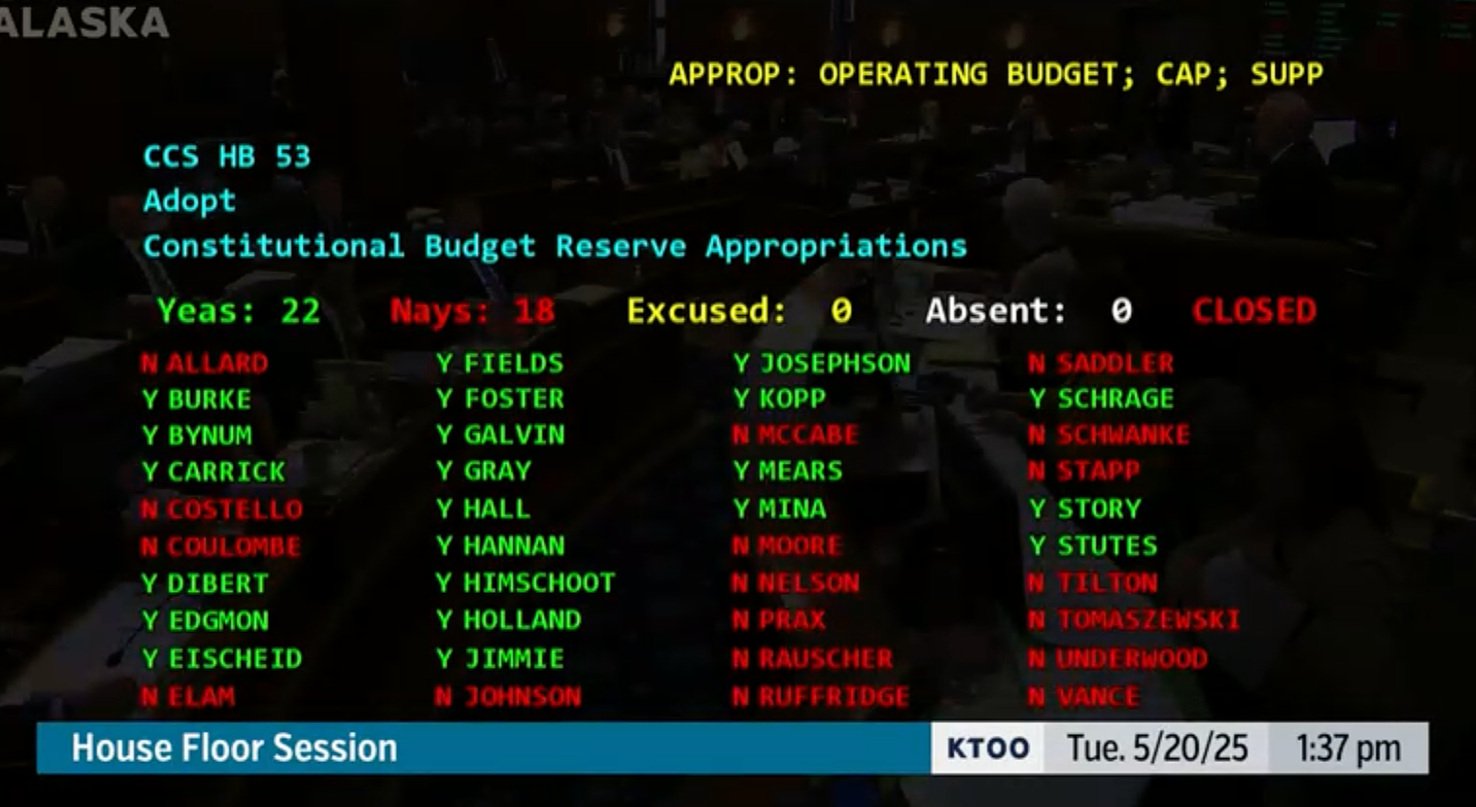
Eighteen House Republicans agreed to withdraw up to $100 million from AIDEA and about $100 million from a scholarship fund to cover a deficit in the current fiscal year. They refused to take funds from the Constitutional Budget Reserve, which required 30 votes. The deficit was the result of an oil price guess a year ago that was too high.
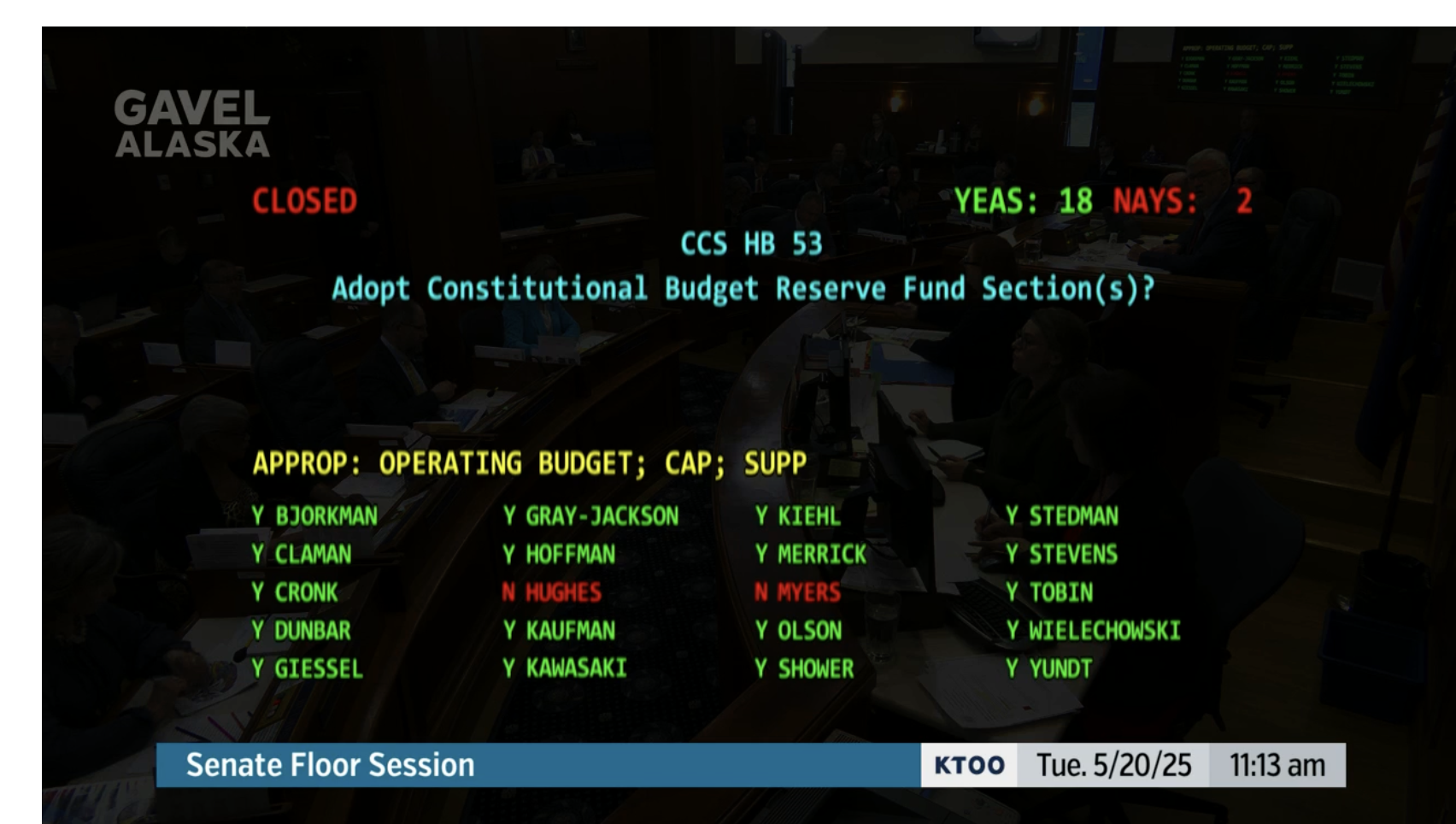
Only Sens. Shelley Hughes and Robert Myers voted to withdraw money from AIDEA and the higher education investment fund to cover a deficit on bills that have to be paid instead of withdrawing about $200 million from the Constitutional Budget Reserve.