Alaska AG joined another foreign junket paid for by corporate interests
Alaska Attorney General Tregarrick Taylor joined a junket to Rome recently, traveling business class and staying in the five-star Waldorf Astoria in Rome.
A report by CNN Thursday said that Taylor and other attorneys general were there courtesy of the Attorney General Alliance, a bipartisan group funded mostly by corporate donations that don’t have to be disclosed. The donors include companies that some attorneys general are facing in court.
“Join us for an unforgettable experience,” the AGA said in its invite for the April junket, where lawyers and lobbyists had direct access to the top law enforcement officials from numerous states.
On its LinkedIn page, the AGA said it was in Rome “at the invitation of the Vatican for a series of productive and deeply meaningful meetings.”
The members of the group enjoy traveling, having visited Spain, France, South Africa, China, Qatar and Hawaii over the years. They will travel to Alaska in August.
In 2021, the AGs enjoyed themselves at the Grand Wailea Resort, “a place billed as a ‘tropical oceanfront paradise’ with ‘luxurious accommodations’ that start at a thousand dollars a night, but AGs didn't have to pay a dime,” a CBS affiliate in Denver reported.
From 2019 to 2023, the AGA collected nearly $27 million in sponsorships, CNN said.
CNN said the AGA contends the April junketeers to Rome had “credited legal education sessions” and that no one talked about litigation with corporate officials.
Taylor is the chair of the AGA this year. Upon getting the role, he issued a press release saying “Under Attorney General Taylor’s leadership, the AGA will focus on a new Chair’s Initiative, “Cyber Awareness: Addressing Digital Threats at Home and Abroad.”
As to why cyber awareness requires so much travel abroad, it doesn’t. But attorneys general in both parties like to see other parts of the world.
The AGA website mentions upcoming events without saying where they are located and what incentives are offered for attendance.
Taylor and his wife, conservative activist Jodi Taylor, traveled to France last summer for an AGA trip that cost at least $20,000, the Northern Journal reported.
He also joined a 2023 junket to South Africa, which included a travel allowance of $26,000. Alaska pays about $10,000 a year for its AGA membership, the Northern Journal said.
“As part of your AGA membership, you are provided a travel scholarship to cover the cost of flight, lodging and meals for you and your guest during the delegation,” the 2023 guidance says. “Each Attorney General has a $26,000 flight allowance. This allowance may be used for you and any guest(s) you designate, Flight arrangements must be made by Monday July 31, 2023,” the Daily Signal reported.
Taylor claims he wants to give fellow AGs the “tools and strategies” for cybersecurity. The frequent flyers could certainly find all the tools and strategies they need closer to home.
“I look forward to the opportunity to work together with other Attorneys General on issues that impact not only Alaskans but our entire nation,” Taylor said in his January press release.
“The Attorney General Alliance serves as a bipartisan forum where Attorneys General work in cooperation to share ideas, educate on emerging issues, build relationships, and foster enforcement through meetings, panels, working groups, and social activities.”
CNN’s coverage included a photo of Taylor and other AGs getting off a tour bus while seeing the sights in Rome.
“This looks like a vacation, but this is a snapshot of how lobbyists and lawyers pay for access to your top state leaders,” is how CNN reporter Kyung Lah put it.
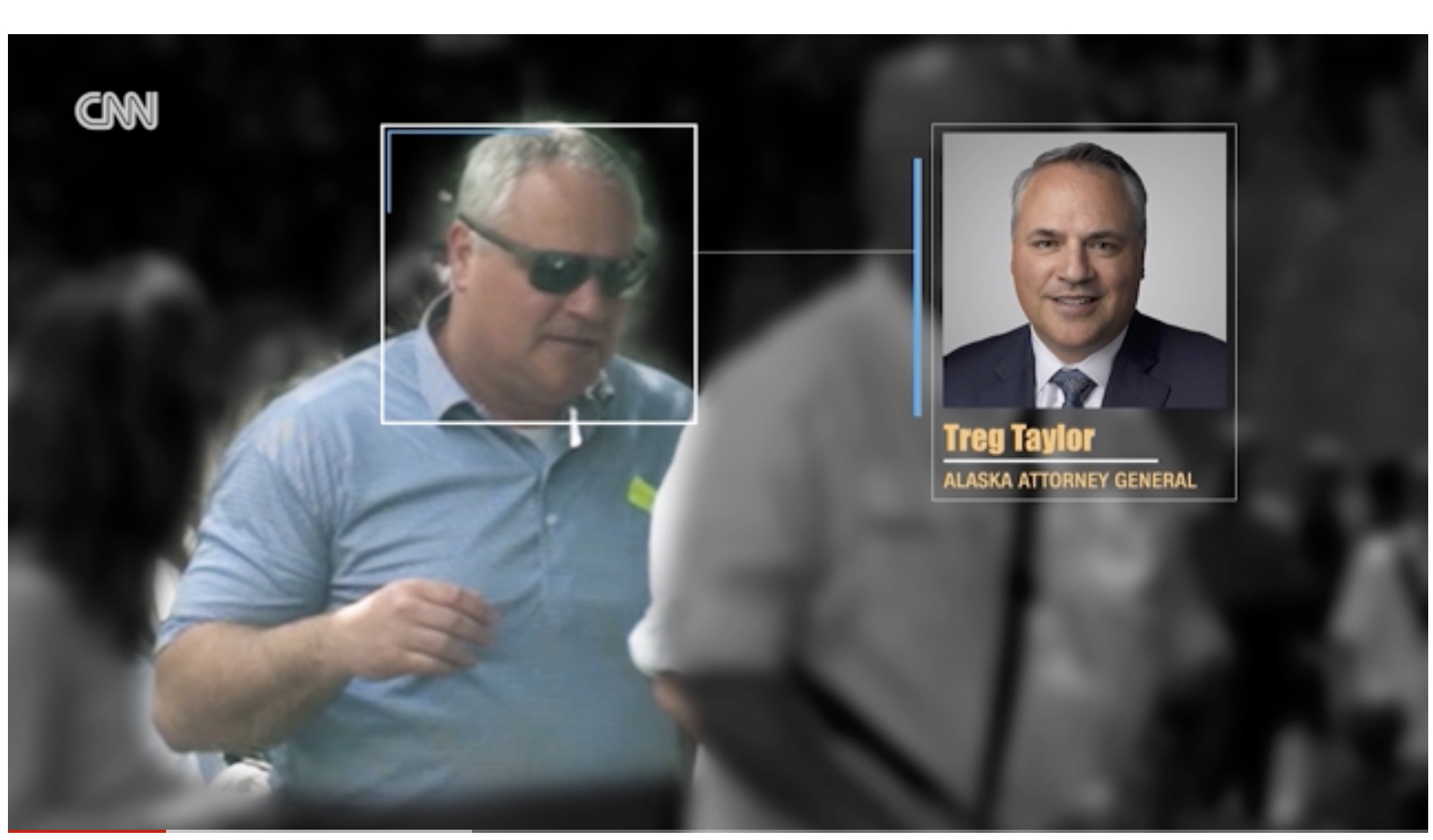
This is a screenshot from a CNN report showing Alaska AG Tregarrick Taylor getting off a tour bus in Rome while on a lavish junket funded by corporate interests that donate to the Attorney General Association.
“Lobbyists essentially fund these trips,” Christopher Toth, former National Association of Attorneys General executive director, told the AP in 2024.
“They funnel the money through AGA, and then that insulates the AGs from being criticized that they’re taking money from lobbyists.”
Three years ago, as he retired as executive director from the NAAG, Toth took aim at the AGA for its secrecy and corporate dependency.
The NAAG gets most of its money from dues, while AGA relies on corporate sponsors.
“AGA is overwhelmingly dependent on corporate and lobbyist money for its activities. Dues only account for a very small share of its revenue. That means when you go on a delegation, some lobbyist or corporation is paying for that. When you have your room and airfare paid for, some portion of that is coming from someone you are investigating or suing,” he wrote to all state attorneys general and deputies.
The corporate donors “essentially buy programming,” he charged.
“While RAGA (Republican Attorneys General Association) and DAGA (Democratic Attorneys General Association) are required to publicly list their contributors, AGA has no such requirement. Accordingly, no transparency exists that allows the public to know who is gaining access to their AG and at what cost. In short, reforms are clearly necessary if the public trust is to be honored,” said Toth.
A 2020 report obtained by Axios listed various sponsorship levels. The biggest donors, those who gave the AGA $50,000 or more, qualified for the most access, including “invite-only events.”
Your contributions help support independent analysis and political commentary by Alaska reporter and author Dermot Cole. Thank you for reading and for your support. Either click here to use PayPal or send checks to: Dermot Cole, Box 10673, Fairbanks, AK 99710-0673.