
Gas line construction in 2026? More hallucination than optimism
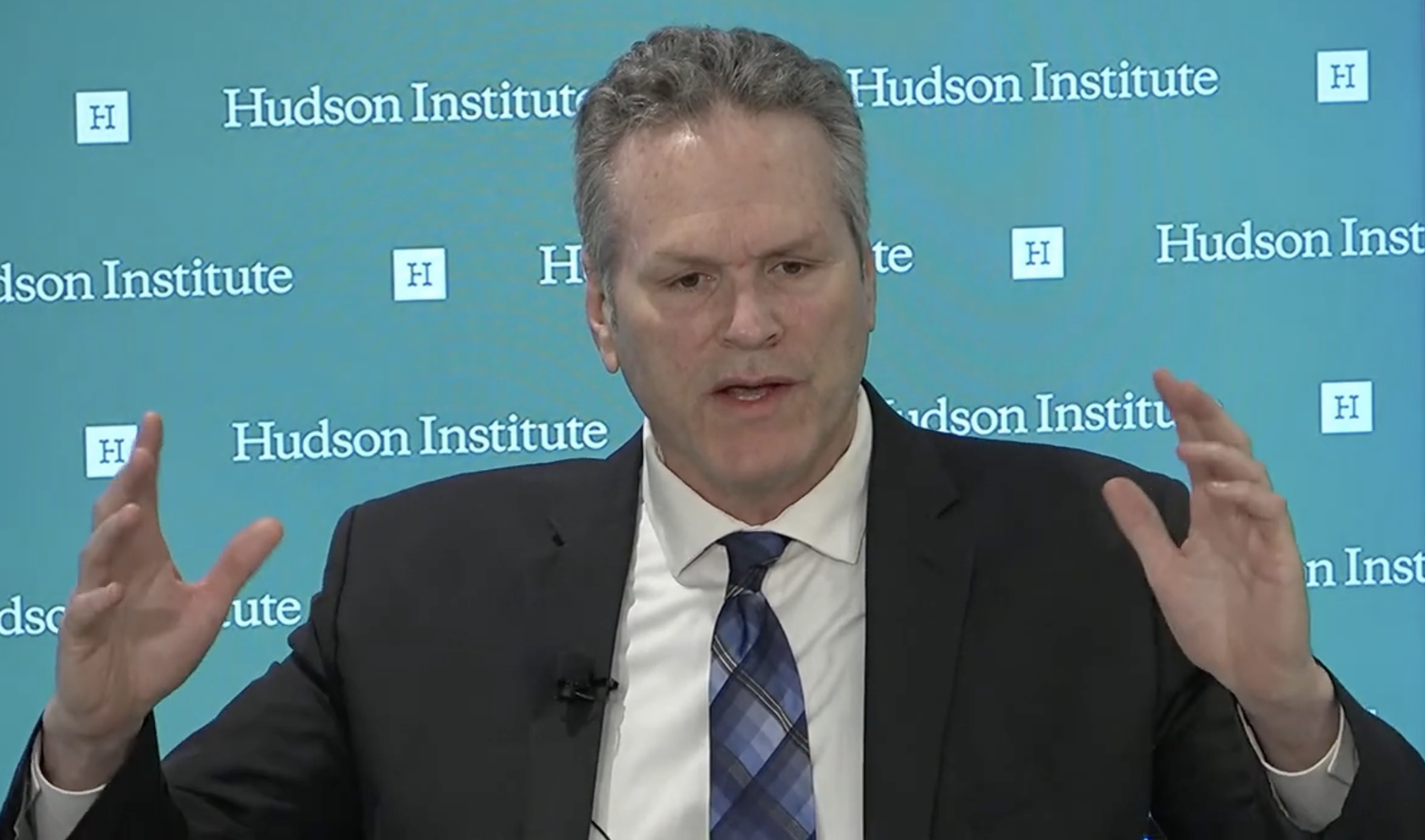
On Monday, Gov. Mike Dunleavy told the Hudson Institute, a right-wing think tank in Washington, D.C. that construction of the Alaska LNG pipeline could begin in 2026.
A final investment decision is expected this fall and “quite possibly you would have potential construction here in a year, year-and-a-half.”
"You could see the pipe being built next summer, into the following year,” he said, with gas flowing in 2028-2029. (In early April he told Fox Business that gas would be flowing in late 2027.)
“That's happening under President Trump. So we'll see gas flowing under President Trump is the goal,” said Dunleavy.
Sen. Dan Sullivan claimed to Fox News on April 10 that “We’re talking about laying pipe as early as the end of this year, the beginning of next year.”
“And it’s got President Trump’s name all over it, cause if it happens, it will be largely due to him,” Sullivan said.
As I wrote here last month, gas line construction is not going to begin at the end of this year and it’s not going to begin a year from now.
To think otherwise is not optimism. It is hallucination.
No one has lined up the billions needed to get this going or ordered 800 miles of pipe.
The so-called “first phase” of the project is to build an $11-billion-plus pipeline to Southcentral, which will exclude the $33-billion-plus of gas treatment and export facilities needed for the full project.
After trying to understand why Alaska politicians have suddenly abandoned Murphy’s Law, which has always been the most important gas line law, I have come to the conclusion that Dunleavy and Sullivan have put all of their trust in Trump. Or at least they are pretending to do so.
Their new motto is “Whatever can go right, will,” forgetting the 50-year history of gas lines that were never built.
They now believe that Trump can do anything. Just ask him.
They are counting on an all-powerful Trump to use the powers of the presidency to turn the pipeline dream into reality in record time, threatening Asian allies to sign on the dotted line or else.
“I think the president is working with leaders throughout the world to realign the world, but using massive projects, massive deals, massive agreements to do that,” said Dunleavy.
He and Sullivan don’t realize their trust in Trump’s deal-making wizardry is misplaced, that Trump’s full-speed retreat from his failed trade war has put his weakness and incompetence on display.
Trump is the embodiment of fiscal uncertainty. He will make it hard or impossible for Asian companies to sign the long-term unbreakable LNG contracts that the Alaska project demands.
Dunleavy and Sullivan have swallowed the notion that Trump’s mob-boss mentality, lurking just beneath the surface, will succeed with the power of the United States at his command.
As Dunleavy put it, for Taiwan, "I believe the idea is that if you buy American gas that's going to help with a little more security."
For Japan and Korea, he said, the White House is concerned that they are buying gas from Russia.
"I think this is probably going to be a discussion point with folks over in the White House since we do have our bases in both countries. And the concern will be you know what's the portfolio mix on Russian gas especially when you have Alaska gas fairly, fairly close and . . . Americans being an ally,” he said.
Dunleavy and Sullivan often mention that Alaska was the only state to get its own executive order from Trump. And the gas pipeline got a shoutout from Trump in the State of the Union address. These are tangible signals that he will do what he says, they claim.
"The White House, we, and others see our gas as the solution to a lot of problems in Asia,” Dunleavy said.
The big advantage of the pipeline now, according to Dunleavy, is that it is no longer a massive project that could cost $44 billion to $50 billion.
It is now three small, but still massive projects. Finding the money to build the first phase, which is expected to cost more than $11 billion, will somehow “derisk” the following two phases, according to the governor.
"We will derisk the pipe and the flowing of the gas first before we do the export" project, he said.
"The biggest hurdle for people to get over is this concept that the project is too big. And it was for some too big. But now when you look at it in terms of piecing it out, as we explain that to our friends in the countries we went to, they understand it,” he said.
The Asian companies will see a pipeline in operation when they are asked to put enormous sums at risk for the export facilities and the gas treatment plant on the North Slope.
It’s hard to see how the first phase makes sense without the other two. Will the billions for Phase 1 actually be guaranteed before anyone knows what Phase 2 and Phase 3 would cost? Will Phase 1 be built without gas sales agreements with the North Slope companies?
And who is going to bear the risk that comes with Phase 1? Who is going to bear the risk if Phase 1 is the only part that gets built?
Alaska consumers? The federal government? The state?
Dunleavy told the Hudson Institute that the military bases in Alaska are going to be vital customers for Phase 1, along with the Alaska utilities. Yes, Trump can order that the military switch to natural gas, but how is all that going to work and on what schedule?
"We need the gas to make sure that we have operational integrity assured with our bases,” Dunleavy said.
He said components of the pipeline could be built in other nations and the steel could be made in Japan or Korea.
This is the steel, which hasn’t been paid for or ordered, that would go into the ground in 2026, if you believe Dunleavy and Sullivan, which I don’t.
I don’t believe the pipeline portion of the project, expected to cost more than $11 billion, will be financed and under construction unless there are firm numbers and real contracts on the rest of the project, which will be more than $30 billion to $35 billion more.
Trusting that Trump’s trade war is the secret to getting this done on a crash basis is crazy, considering the mess he’s made with tariffs and the damage he’s created within the U.S. economy.
The other day, former Sen. Mark Begich, a lobbyist for the gas line, asked me why I “hate” the gas line. I don’t hate the gas line, I told him. What I don’t like is wishful thinking offered as proof of viability.
Your contributions help support independent analysis and political commentary by Alaska reporter and author Dermot Cole. Thank you for reading and for your support. Either click here to use PayPal or send checks to: Dermot Cole, Box 10673, Fairbanks, AK 99710-0673.