Easiest oil tax vote in the history of oil tax votes in Alaska—close the Hilcorp loophole
The oil companies spent millions in 2020 telling Alaskans that defeating an oil tax initiative would “SAVE JOBS and the PFD.” They also said that the Legislature is the proper place to write the rules.
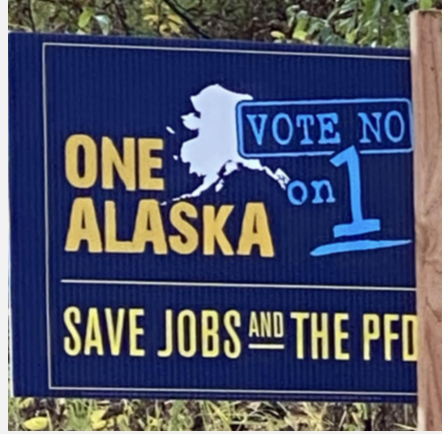
OneAlaska, a group financed by the oil industry, said defeating an oil tax initiative in 2020 would save jobs and the Permanent Fund Dividend.
The Legislature should heed that advice this year by closing the Hilcorp loophole and cutting oil tax credits, two ideas that Gov. Mike Dunleavy endorsed in 2021, two steps that will help save the Permanent Fund Dividend.
Closing the Hilcorp loophole is the easiest oil tax vote in the history of oil tax votes. Several sources have said that Sen. Matt Claman, a Democrat, could be the deciding vote on this matter, but he opposes closing the loophole. He told me that his district doesn’t support oil tax changes.
Claman and the other opponents of this bill are wrong.
Some of them are seriously misinformed. In a committee hearing, Sen. Shelley Hughes claimed that applying the oil company income tax to Hilcorp is a severance tax, meaning a tax charged on the amount of oil produced.
It is not a severance tax. It is an income tax that has long been part of state law, paid for by all the major companies, except Hilcorp.
Sen. Robert Myers claimed applying the tax to Hilcorp “feels like we’re targeting one company.” He didn’t mention that BP paid the tax on the operations it sold to Hilcorp. The only reason Hilcorp isn’t paying the tax is that when the law was created no one expected a company would use the exact corporate structure that billionaire Jeff Hildebrand has chosen with Hilcorp.
The state should have closed the loophole years ago to treat the companies fairly.
If the Legislature fails to close the loophole and fails to cut oil tax credits, the consequences will be lower Permanent Fund Dividends and less money for education and other services.
That is a logical linkage that needs to enter the heads of everyone in Alaska politics, including Claman, Hughes and Myers.
In its campaign against the 2020 oil initiative, the Alaska oil companies called for the Legislature to make decisions on oil taxes.
“This ballot measure goes too far. It is bad for jobs and puts our economy at risk. There has to be a better way for Alaska,” the oil companies said through their front group, “OneAlaska.”
“We can make a better future for Alaska. Together,” the front group promised.
The Anchorage Daily News echoed this talking point about a “better way” in its vision for the 2021 session, calling on the companies to “come to the table and help hammer out a fair solution that doesn’t kneecap investment on the North Slope, but which also helps provide services essential to Alaskans.”
Of course the oil industry had no interest in coming to the table and continues with a talking point that never goes out of style—any tax increase will be catastrophic.
ExxonMobil, BP, ConocoPhillips and Hillcorp spent hundreds of thousands in staff time and at least $25 million on the “woe is me” PR campaign in 2020 that paid off at the polls.
Erec Isaacson, the president of ConocoPhillips Alaska, wasn’t living in Alaska in 2020 to witness the campaign for and against Ballot Measure No. 1 to raise oil taxes on the most profitable fields.
But after taking his current position in 2021, he said “As an industry we went out and educated the people of Alaska about the importance of having a competitive oil and gas industry here in the state.”
“And so as a result of that we defeated Ballot Measure 1 by a 16-point margin, a huge margin.”
OneAlaska said that oil taxes should be decided upon by the Legislature out in the open and that defeating the ballot measure was a way to “save jobs and the PFD.”
OneAlaska vanished after the election and the oil industry has made no effort to push the Legislature to look at oil taxes in the open or to “save jobs and the PFD.”
The oil industry promises in 2020 that the Legislature is the proper place to thoroughly consider oil taxes and that the industry will help save the PFD are all but forgotten. But it’s time for the industry and its legislative allies to make good on them.
OneAlaska pretended to be a mom-and-pop enterprise created to unify Alaskans, with no interest in benefiting corporate leaders in Houston and stockholders who want dividends, but not the Permanent Fund kind.
The “sky is falling” rhetoric ignored the reality that the main impact of the initiative, with oil prices low, would have been to raise the minimum tax to 10 percent, which is reasonable. The initiative was the only short-term revenue option open to the state.
The so-called “Alaska leadership team” of OneAlaska did not include the real leaders—executives of the oil companies who spent $25 million or more to influence the vote in Alaska.
There are no additional hearings set so far on Senate Bill 92, which would close the Hilcorp loophole. The bill is languishing in the Senate Finance Committee.
There are no additional hearings set so far on Senate Bill 112, which would cut oil tax credits by $3. The bill is languishing in the Senate Resources Committee.
Your contributions help support independent analysis and political commentary by Alaska reporter and author Dermot Cole. Thank you for reading and for your support. Either click here to use PayPal or send checks to: Dermot Cole, Box 10673, Fairbanks, AK 99710-0673.