No surprise that Cook Inlet oil and gas lease sales flopped
More than three months ago, I wrote the column posted at the bottom of this post, which I bring to your attention because it should surprise no one that the state and federal oil and gas lease sales in Cook Inlet in December turned out to be complete flops.
The Alaska Beacon has the best coverage. The lack of interest in these sales and the one that took place last spring highlight the need for leadership in Alaska about just how we are going to keep the heat on and the electricity flowing in Alaska’s Railbelt a decade from now. The answer is not at all clear.
There is no coherent or practical plan from the Dunleavy administration and the utilities about how to proceed over the long term.
Hilcorp Alaska bid $63,983, proposing to lease one tract of 5,693 acres in the federal oil and gas lease sale. That was the only bid, for $11.24 per acre. There were no bids on about 1 million acres. (I revised the text of the blog post to correct a mistake I made confusing hectares with acres. There are about 2.5 acres in a hectare.)
Hilcorp bid on six tracts in the state sale with estimated bids of about $360,000 covering about 20,000 acres. There were no bids on about 3.3 mllion acres.
Alaska’s Congressional delegation, Gov. Mike Dunleavy and the oil industry claimed last spring—when the Biden administration canceled the federal sale for a lack of interest—that there was a lot of interest by oil companies in leasing more territory in Cook Inlet. Dunleavy claimed the canceled sale would lead to higher gasoline prices in the Lower 48.
They were completely wrong.
“As the former Natural Resources Commissioner for Alaska, I know there is no way they could have confirmed ‘no interest’ until they held the lease sale. Indeed, a letter from the Alaska Oil and Gas Association, representing 14 oil and gas producers, regarding the Cook Inlet lease sale suggests otherwise. Joe Biden, Gina McCarthy, and the ultra-left members of this administration are blatantly lying to the American people,” said the hyperbolic press release from Sen. Dan Sullivan.
Sullivan said that “Vladimir Putin is popping corks in the Kremlin” because the sale was called off. The sale was resuscitated through a bill approved by Congress, a bill that Sullivan voted against.
The language requiring the sale was inserted into the “Inflation Reduction Act” to get Sen. Joe Manchin, among others, to back the bill.
Sullivan didn’t say if Putin has stopped popping corks, but with one bid from one company, it turns out that the Biden administration was correct. Sullivan was wrong. So was Sen. Lisa Murkowski, who claimed that the oil companies were dying to lease more territory to supply natural gas to Southcentral Alaska.
“Cook Inlet is the sole source of the natural gas that more than 400,000 people in Southcentral Alaska—and significant military bases that are critical to our national security—depend on,” Murkowski said in the press release. “I can say with full certainty, based on conversations as recently as last night, that Alaska’s industry does have interest in lease sales in Cook Inlet. To claim otherwise is simply false, not to mention stunningly short-sighted. The Biden administration needs to recognize how this decision is going to hurt Alaskans, reverse it immediately, and get the federal oil and gas program back on track now.”
The lack of industry interest in Cook Inlet is nothing new. Hilcorp has told its customers that natural gas supply contracts may not be renewed in future years because of a shortage of gas supplies.
Here is what I wrote here on Sept. 14, 2022.
Four months ago the state held a big oil and gas lease sale in Cook Inlet and the oil industry looked the other way.
Now, just in time for the Dunleavy reelection campaign, the state is getting ready to do it all again, keeping with an overall Dunleavy pattern of using state resources to benefit the Dunleavy campaign.
The state is going to claim that we need another lease sale and a burst of campaign publicity about the lease sale before the election, with the sale in late December.
Lease sales aren’t free. The state has to set up the sale, check all the documents, seek bids, review the bids and make sure everything is in order. Weeks of work by state employees are required, regardless of whether there are any bids. When there is clear documentation that the industry is not interested—which is what happened four months ago—this exercise becomes a political show for the Dunleavy campaign.
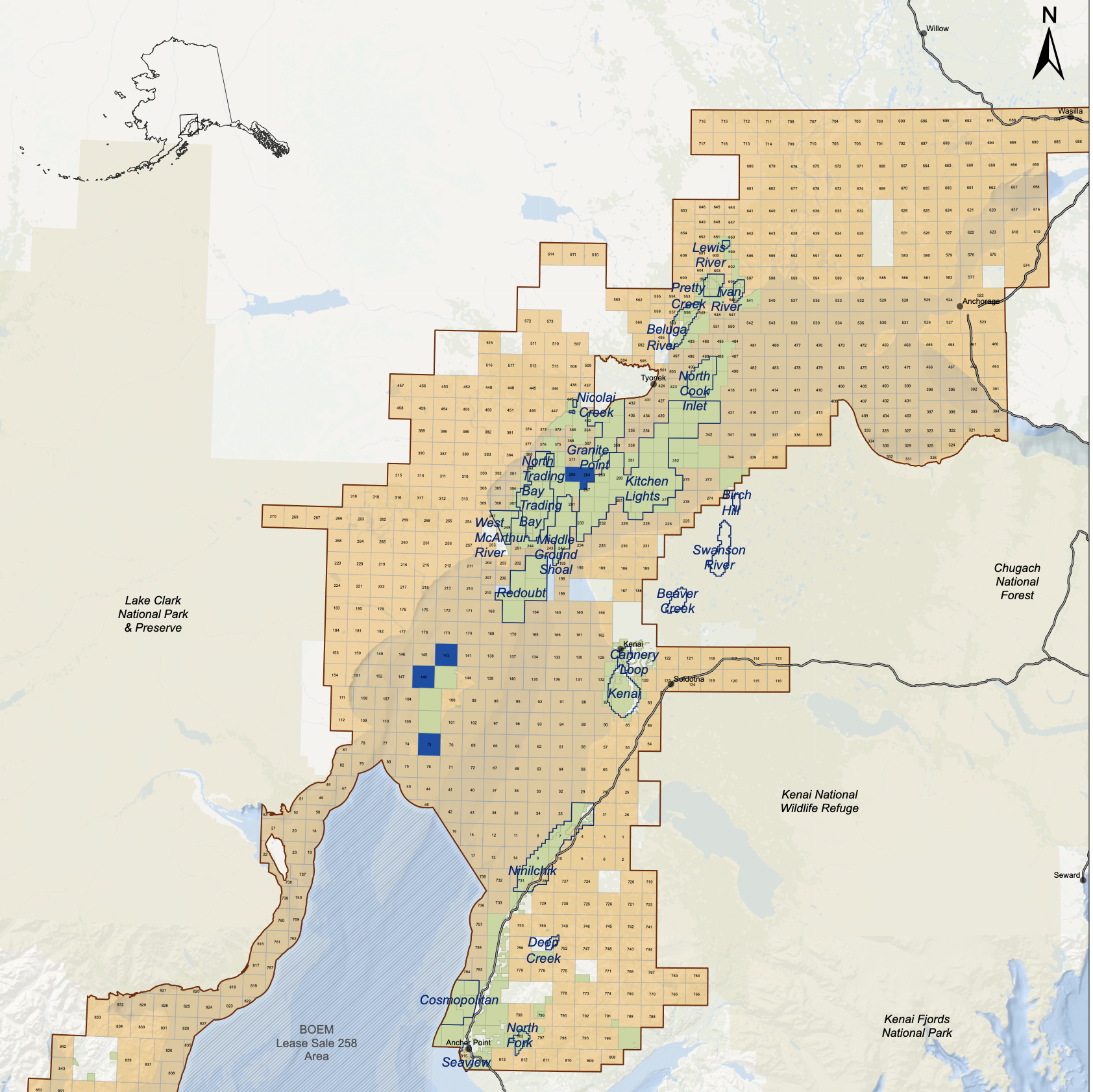
In May, the state offered more than 3.3 million acres of state-owned land in 833 tracts ranging from 640 to 5,760 acres in Cook Inlet.. The state offered lands onshore and offshore for minimum bids of $15 per acre, with an annual rental rate of $5 per acre for the first five years.
Only one company bid on any of the tracts. Furie bid and acquired two tracts that had been relinquished by the previous owner of the company. . The two bids covered 5,000 acres. There were no bids on 3.3 million acres.
“It was indeed an absolute bust (the sale) but the fact is that there just aren’t very many companies operating in Cook Inlet,” Mary Ann Pease, an energy consultant, told Tim Bradner, a veteran Alaska reporter.
The lack of interest from the oil and gas industry followed warnings by Hilcorp, which didn’t bid this time, that future gas supplies for Southcentral Alaska are in doubt.
In January, the state told legislators that there would be one Cook Inlet lease sale in 2022 and another one in the spring of 2023. A consistent process and timeline are important, the state Division of Oil and Gas said in its annual report to legislators, for a stable, predictable leasing program that allows companies and the public to plan.
In August, the state announced that it wanted another sale of the same millions of acres in December, contrary to the statement it made to legislators about the need for a stable and consistent process.
About 1.5 million acres that could be leased are onshore and 1.8 million acres are offshore. The state will likely conclude that the justification for the new sale is that the federal government is going to hold a lease sale of its own in December, thanks to the new so-called Inflation Reduction Act signed by President Biden.
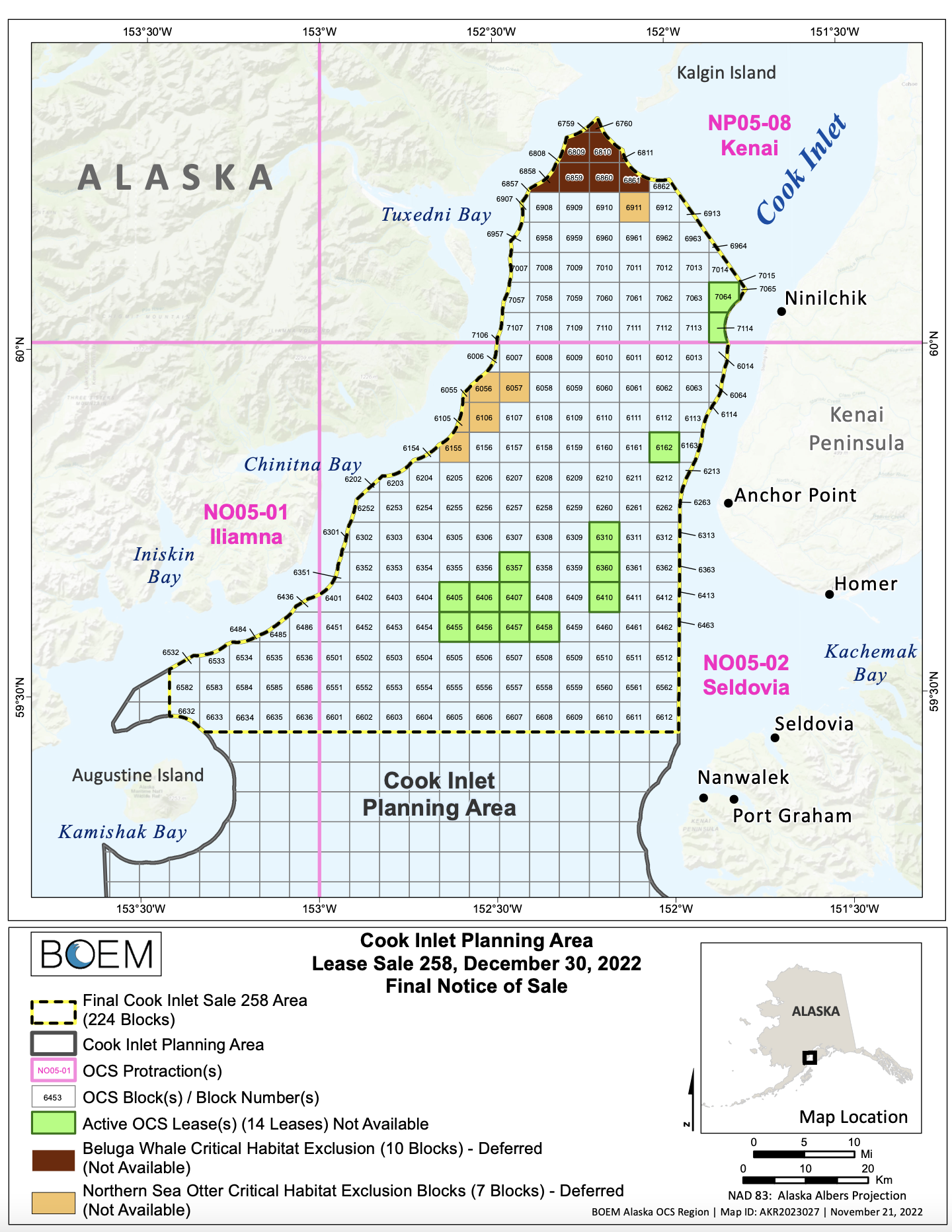
The federal sale will offer 224 Outer Continental Shelf blocks of “approximately 1.09 million acres of seafloor, stretching roughly from Kalgin Island in the north to Augustine Island in the south,” the Bureau of Ocean Energy Management says.
The Cook Inlet federal sale has been canceled earlier this year by the Biden administration, which said there was a lack of industry interest in Cook Inlet, a reasonable claim given what has happened in recent years.
Dunleavy, along with Murkowski and Sen. Dan Sullivan all complained about the decision and claimed the oil and gas industry can’t wait to drill for more oil and gas in Cook Inlet. The failed state lease sale says they are completely wrong.
Dunleavy went on Fox News to attack Biden and make the absurd claim that gasoline prices would be higher because the Cook Inlet lease sale had been stopped. He said Earthjustice and the Sierra Club are “running the country now.”
“You can’t make this stuff up,” said Dunleavy, who made this stuff up.
The language requiring that the Biden administration hold a Cook Inlet lease sale this year was inserted in the bill as an attempt to get the backing of Sen. Lisa Murkowski and other Republicans. They opposed the bill.
Passage of the new federal law mandating a sale before the end of this year does not warrant another state sale when the same millions of onshore and offshore acres drew zero interest in the spring.
Dunleavy wants the state acreage offered for lease before the election as a campaign stunt to show that he wants more oil and gas drilling and is taking action to make it happen.
But what Dunleavy is really offering is empty talk about more oil and gas drilling in Cook Inlet.
Rather than stage a political show, Dunleavy should have led an effort since 2019 to find out why companies aren’t interested in drilling for oil and gas in Cook Inlet and what it would take to make that change. What would the state have to give up? Should the state be giving up anything? What are the consequences if Hilcorp’s warning is right? There is a lot at stake here. And a lot for a governor to do.
Dunleavy is doing nothing to solve these real problems with our energy future. He prefers empty gestures designed to generate publicity for his campaign.
Your contributions help support independent analysis and political commentary by Alaska reporter and author Dermot Cole. Thank you for reading and for your support. Either click here to use PayPal or send checks to: Dermot Cole, Box 10673, Fairbanks, AK 99710-0673