The Pebble case has nothing to do with the Kuskokwim fishing case, so this should have been a separate procurement, but the Dunleavy administration prefers doing business with Consovoy McCarthy and avoiding competitive bids, so it added the Pebble mine case to an unrelated contract to keep the work with a law firm it likes.
Read More
Former Sen. Mark Begich is among those getting paid under a no-bid statehood defense contract for the Dunleavy administration.
The contract is for $50,000 and it runs from September 11 until January 30. Had it been a $50,001 contract, the state would have had to seek some competition.
The contract is so short and so small that I suspect that the state intends to extend the duration and amount, contrary to a procurement regulation cited in the contract that allows no-bid deals only if the cost does not exceed $50,000.
Read More
There are at least a half-dozen major legal deficiencies with one of the statehood defense contracts the Dunleavy administration has with Holland & Hart LLP, a contract under which former legislator Drue Pearce collected $450 an hour.
Last week I wrote about the $2 million contract the state has with Holland & Hart to handle legal issues for the Alaska Industrial Development & Export Authority.
Read More
Gov. Mike Dunleavy wants $2 million more from the Legislature for his statehood defense campaign over grievances real and imagined. Before this goes any farther, let’s see an accounting of the millions spent so far, starting with the illegal contract with former Attorney General Craig Richards, which has numerous legal problems.
With no public notice, the state hired Richards under a no-bid contract for $12,000 a month to be the statehood defense coordinator.
Read More
The sentence that stands out in the state job offer is this: “There is a process which we must follow when making a hire of this senior level in state government in Alaska which includes the approval by Governor Dunleavy’s Chief of Staff.”
But there is no process like that in state law. It is a Dunleavy policy to extend his political reach throughout state government.
Read MoreSean Thomas, the executive chosen by the Alaska Aerospace Corporation board to serve as president of the state rocket company, says he believes that Gov.Mike Dunleavy intervened to deny him the job because Thomas and his wife signed the recall petition, he told the Anchorage Daily News.
Read MoreThe Dunleavy administration and its consultant tried to decide “The Way Forward” for the Transportation Advisory Committee reviewing the Kinross ore-hauling project on the afternoon of November 13.
The so-called “Way Forward” is being kept secret, as shown in the blacked out section of the email below, though other information shows the general idea was to shut down the committee as soon as possible. The committee was scheduled to meet November 16.
Read MoreAt a minimum the state should set operating conditions and specific safety rules for the Kinross operation, recognizing that the number of trucks will likely be increased after the project gets moving because this is expected to be a highly profitable venture.
Read More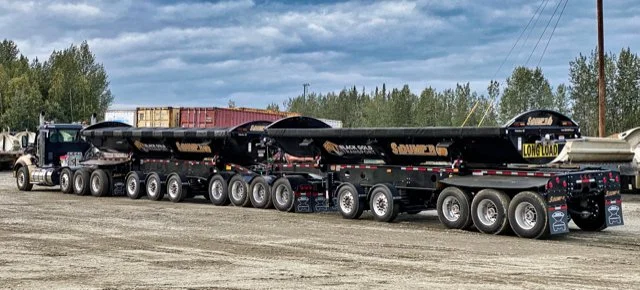
The Dunleavy administration claims that a new analysis of the Steese Expressway bridge over the Chena River has led to a reversal of its previous position—that the ore-haul trucks should not be allowed to use the downtown bridge.
There is reason to be skeptical of the timing and substance of this revelation by the Dunleavy administration.
Read More
When Gov. Mike Dunleavy launched his energy task force last spring, he said he wanted to see plans by the end of this year to cut electricity prices in Alaska to 10 cents per kilowatt hour by 2030.
“Now some people will say that’s incredibly optimistic, we can’t do that, etc., etc., etc. But I’ve gotta remind you of a couple of things done in history here in the not-too-distant past. 1961, John F. Kennedy said we’re gonna go to the moon by the end of the decade,” Dunleavy told his task force on April 25.
Read More