Dan Sullivan calls for higher military spending without saying how he would pay for it

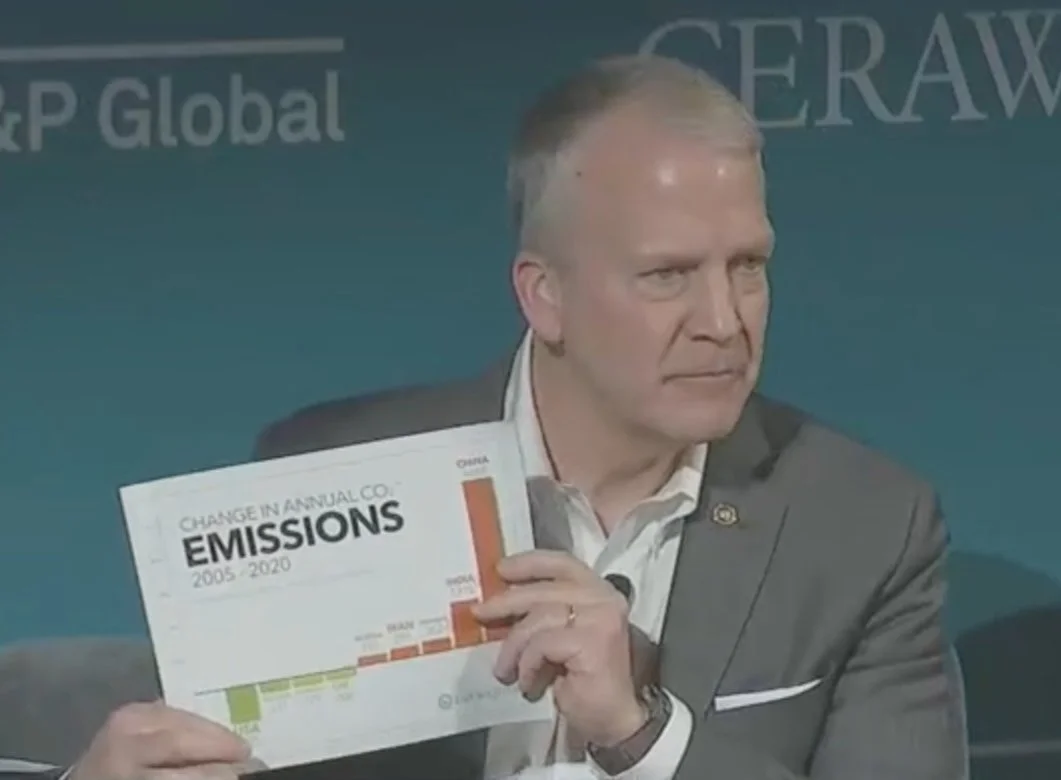
Sen. Dan Sullivan claims that President Joe Biden knows the Senate will increase military spending above the president’s proposal and it is the “opposite of leadership” to not put in a higher proposal.

What is really the “opposite of leadership” is for the junior senator from Alaska to endlessly argue for higher military spending without ever proposing higher taxes to pay for it. And to endlessly argue for unidentified spending cuts.

Read More


Cliff Groh is right: Alaska House majority creates Juneau stalemate

Let’s give credit where credit is due: The Republican-led House majority is the biggest obstacle to creating a sensible fiscal plan for Alaska. The House Republicans refuse to bring any of the important pieces to a vote in the 40-member House.

The House Republicans say they can’t cut the budget, but they want a spending cap that would cut $100 million from the budget they can’t cut. The grandstanding brigade can’t identify what services they want to cut.

Read More
Hilcorp threatens to cut Alaska investment if state closes the $100 million Hilcorp loophole or takes other steps to raise taxes

Texas billionaire Jeff HIldebrand, who has a net worth of $9 billion or $10 billion, wants the Hilcorp loophole in Alaska tax law to remain in place, a provision that costs the state about $100 million a year.

If the state closes the loophole, HIldebrand’s “privately owned family business” claims it will cut Alaska spending and spend money in other states.

Read More
Revisiting the trifecta 10 years later: Oil production did not increase with SB 21

The league of SB 21 defenders have lowered the bar and redefined success from an “increase in Alaska oil production” to “stabilizing Alaska oil production” at close to 500,000 barrels a day. But SB 21 was not sold to Alaskans as a plan to stabilize oil production. And there is good reason to believe that Alaska oil production would have stabilized near 500,000 barrels a day under the old tax system.

Read More
Ten years later, SB 21 oil tax remains a ‘failed system,' former DNR commissioner says

Geologist Mark Myers, a consultant who works for oil producers around the world, is one Alaska’s most trusted voices on the oil and gas industry in Alaska.

“I have never in many different projects in many different countries, never recommended Alaska’s system as a leading practice. But I do use it as an example of a problematic and failed system,” Myers told the Senate Finance Committee this week.

Read More
Watch Robin Brena cut through oil industry propaganda in compelling legislative presentation

The two main levers that determine whether Alaska is getting what it should from oil developed on state lands are royalties and production taxes. “We’re getting a half to two-thirds of what other people are getting,” Robin Brena said.

In the decade since the enactment of SB 21, the state has collected $4.5 billion in production taxes and provided $5.6 billion in per barrel credits. The credits mean the alleged 35 percent oil tax is a joke.

“I would call that underperformance on a massive scale,” he said.

Read More
Contrary to oil industry claims, closing the $100 million Hilcorp loophole is not 'reneging' on a deal

That the Dunleavy administration failed to propose legislation and the Legislature failed to muster the political might to approve measures in 2020, 2021 or 2022 to fix the loophole does not mean that Alaskans promised Hilcorp to keep the company free of an income tax long paid by Exxon, ConocoPhillips and others.

Owner Jeff Hildebrand, who is worth $9.1 billion, according to Bloomberg, or $10.2 billion, according to Forbes, and everyone at his company knew that state leaders might wake up some day and require Hilcorp to pay the petroleum income tax.

Read More
The three arguments the oil companies make about tax increase proposals never change

On February 20, 2017, state consultant Rich Ruggiero told legislators that the oil industry could be counted on to always say the same three things when faced with a proposed increase in oil taxes.

"In their world there is no concept of the operator earning too much and a government earning too little," he said.

The big three arguments are being raised anew with the plan to generate about $600 million from a combination of oil tax changes.

Read More